Black, Autistic, and Teaching Trans Voice with Shaynah
Dec 04, 2025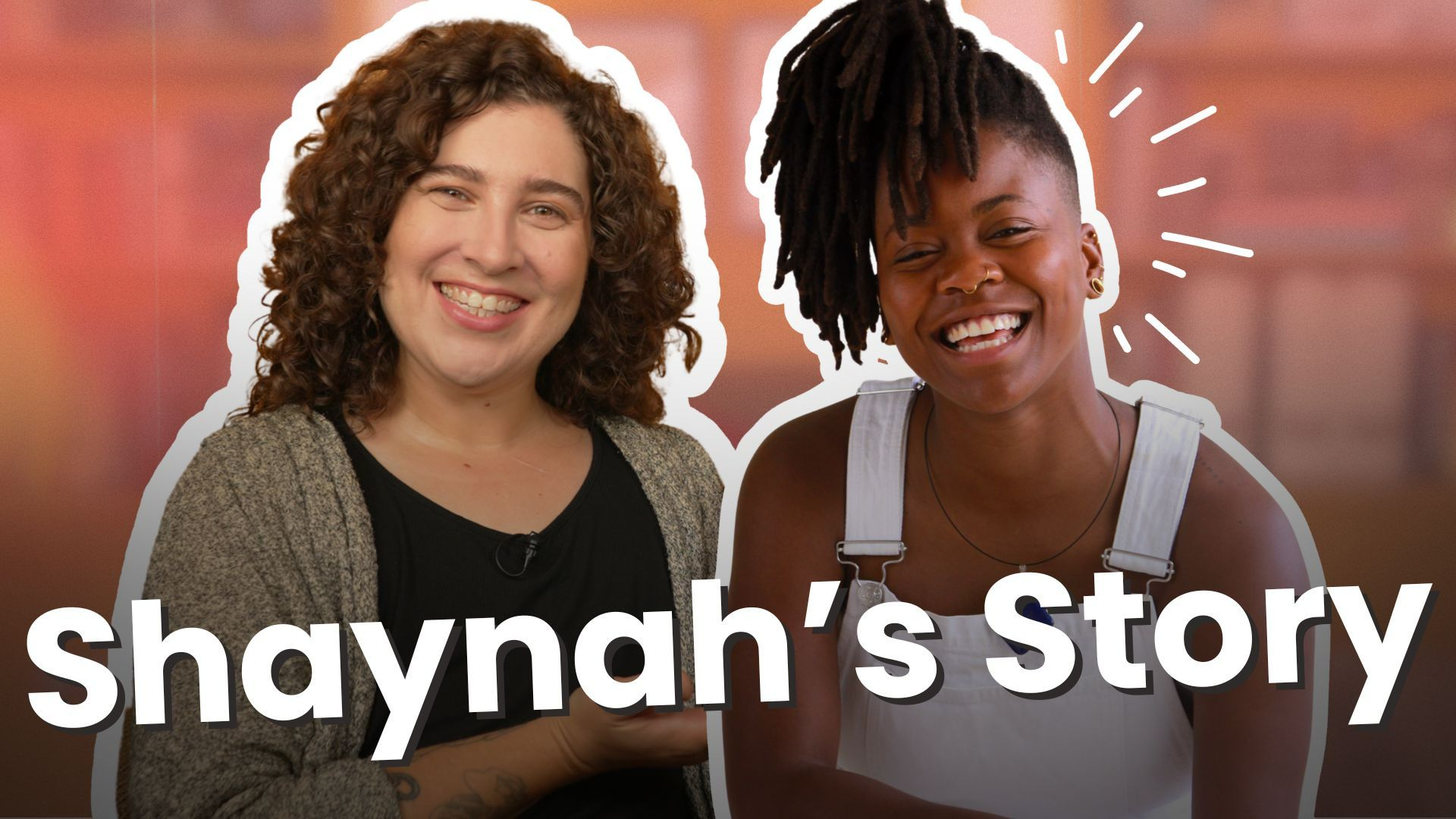
When Shaynah joined last year's cohort of my teacher training course, Learn to Teach Trans Voice Alteration in Five Weeks, they brought something special to our community. As an autistic Black musician working across Dutch and English contexts, Shaynah opened up conversations about accessibility, language, and how we teach transgender voice training that we desperately needed to have.
Shaynah is a soulful neo R&B artist, producer, and voice teacher based in Rotterdam. They create music that sparks mental, spiritual, and physical freedom, encouraging people to become comfortable with their own vulnerability. But what drew them to trans voice work came from an unexpected place: coaching contestants on The Voice Holland.
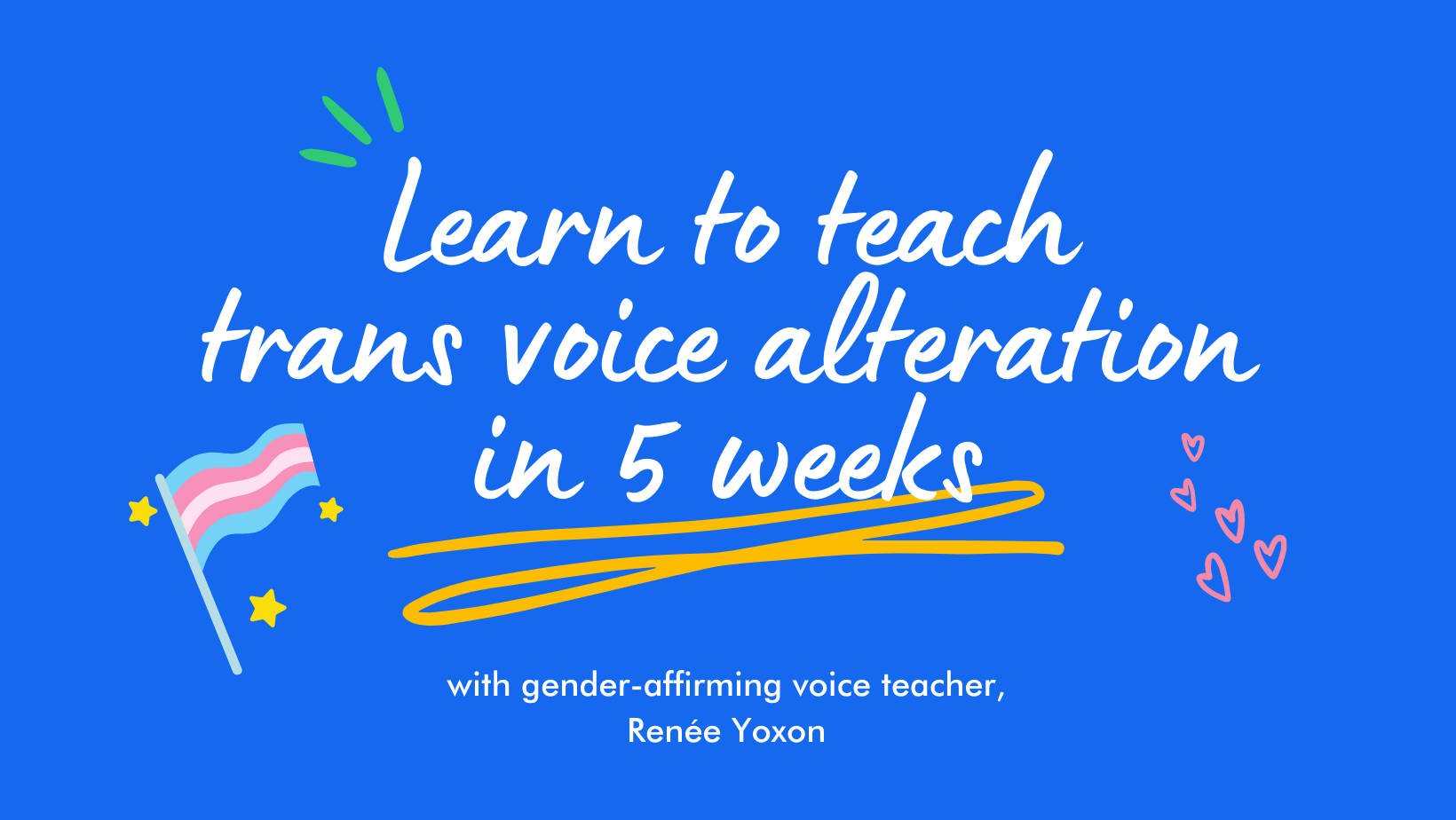
Learn to Teach Trans Voice Alteration in 5 Weeks
You can teach trans voice lessons, too! Use your singing teacher or speech-language pathology skills to spread trans joy throughout your community.
In this conversation, we explore what it's like to learn trans voice pedagogy as a singing teacher, how being neurodivergent shapes the way we learn and teach, navigating voice and gender across multiple languages, and what Shaynah's taking from the course into their own teaching practice.
Table of Contents
- Watch the Full Interview
- From The Voice Holland to Trans Voice Training
- How Neurodivergent Shapes Learning and Teaching
- Voice, Gender, and Language Across Cultures
- What's Missing from Music Education for Black Students
- The Relationship Between Singing Technique and Speaking Voice
- Key Takeaways from the Teacher Training
- Connect with Shaynah
Watch the Full Interview
Prefer to read? Keep scrolling for a complete breakdown of our conversation about Black, autistic, and trans voice teaching.
From The Voice Holland to Trans Voice Training: An Unexpected Journey
Most people don't connect reality television with transgender voice coaching, but that's exactly where Shaynah's journey began.
"I did the vocal coaching for The Voice Holland for a while," Shaynah explains, "and for all the subgroups like The Voice Kids. It was when I was teaching The Voice Kids that I ran into a lot of cis boys going through puberty and noticing changes in their voice."
Working behind the scenes as a professional vocal coach for the show's contestants, Shaynah noticed something significant: the months-long gap between pre-auditions and filming meant contestants experienced dramatic vocal changes, whether from puberty, approaching menopause, or other hormonal shifts.
"That kind of got me thinking, like, who has to deal with this firstly? And how do I deal with that as a vocal coach?" Shaynah recalls. "That's when I kind of went into trans voice coaching, because I noticed that there is not much information about that, at least not in Holland where I live."
Why Voice Physiology Matters for Shaynah
As someone who's "heavily autistic, very neurodivergent," Shaynah approaches voice work differently than many teachers. They need to understand exactly how something works before they can fully use it.
"If I completely understand how something works, it makes it easier for me to accept and use that thing," Shaynah explains. "So when it comes to my voice, if I know what techniques work best for me, if I know how something works physiologically, it makes it easier for me to fully use my instrument."
This deep desire for physiological understanding is what drew them to trans voice training and what made my teacher training course such a good fit.
How Being Neurodivergent Shapes Learning and Teaching Trans Voice
When I asked Shaynah how neurodivergent shapes the way they learn, their answer revealed something important about accessibility in voice feminization training.
"I like knowing how something works EXACTLY," they say. "Like I want all the details. I want to know what muscle moves what way to create what sound. I go deep when I want to learn something, I go deep."
Why Physiological Explanations Matter
Shaynah appreciated that the teacher training course kept things physiological rather than metaphorical.
"A lot of times with voice, people talk about how it's supposed to feel as opposed to what is actually happening in your throat," Shaynah notes. "So I loved that approach of yours and the resources you gave us."
For many autistic learners, understanding the mechanics of voice production—which muscles contract, how resonance changes, what physically creates different sounds—makes technique accessible in a way that metaphors simply don't.
The Course as an Introduction to Lifelong Learning
Shaynah views the teacher training not as complete mastery, but as a map to continued learning.
"For me, the course felt like an introduction, because there is so much to learn still," they explain. "But now I also know where to find the knowledge, so I'm really grateful for that."
Currently working through Kit Heyam's Before We Were Trans, Shaynah has already accumulated a long reading list of trans voice and gender history resources. This approach (providing not just information but pathways to deeper knowledge) serves neurodivergent learners who want to understand topics comprehensively.
Teaching Neurodivergent Students
When I asked if Shaynah connects better with autistic students, they offered a nuanced perspective:
"Yes and no. Because autism is such a broad spectrum, for some students I immediately get them because I see a lot of myself in them, and I know what kind of works in the broadest sense for autistic people," Shaynah explains. "But I also learn a lot from them, because sometimes their experience as a neurodivergent person is very different from mine."
Most importantly, Shaynah makes space for neurodivergent learning needs because they have to make that space for themselves.
"I am not 'the usual,' to say it like that. So I am used to having to find different ways than the norm for things that work for me. So I think it does help that I'm used to doing that for myself. That makes it a bit easier for me to do it for other people as well."
Research on creating accessible music education for neurodivergent populations confirms what Shaynah has learned through experience: when we design learning environments that accommodate diverse neurological needs, everyone benefits.
Voice, Gender, and Language Across Five Languages
Shaynah navigates voice and gender across five languages: Papiamentu, Sranan, Dutch, English, and Spanish. This multilingual experience reveals how profoundly language shapes our understanding of gender expression.
The Challenge of Gendered Dutch
"Dutch is a very difficult language. It is quite gendered," Shaynah explains. "For example, cousin—there is no gender neutral word for cousin in Dutch. It's either female or male, or you would have to say 'child of my aunt,' which is a mouthful."
This grammatical challenge affects how people discuss gender identity in Dutch versus English.
"People tend to have more trouble speaking on gender in Dutch," Shaynah notes. "I myself also find it easier to speak on gender in English. Maybe that's what I'm most comfortable with. And I also write in English, so I think my language for emotions is more English than it is Dutch."
Papiamentu's Fascinating Gender Structure
While Spanish is heavily gendered (with people experimenting with "e" endings instead of "o" or "a"), Papiamentu offers a fascinating alternative.
"Papiamentu is not very gendered," Shaynah explains. "In Papiamentu, we usually assign the female words to stuff, but it is meant neutral. That's like the opposite of French or Spanish!"
The word for sibling, "ruman," is completely gender neutral. "You could add if you want to say male sibling, or you just leave it at sibling," Shaynah says. "A lot of words end in an 'a' which would be considered female while they're not."
This creates an interesting translation quirk: "When somebody who's from Curaçao or speaks Papiamentu translates to Dutch, they usually call everything female. Because if you translate it literally, that's what it becomes. Which is funny because Dutch, everything is male."
How Voice Gender Varies Across Cultures
Beyond grammar, the actual sound of gendered voices differs dramatically across languages and cultures.
In Dutch, gendered voice patterns follow familiar Western patterns: "People who identify more female speak with a bigger inflection and a bit higher. And people who are more male do the opposite. So it's a bit more monotonous and a bit lower. Also resonance-wise."
But in Papiamentu and Spanish, something different happens.
"People kind of sing when they speak," Shaynah describes. "They go all the way up there, all the way down there and in between. I haven't noticed a big difference between feminine and masculine people, aside from resonance—masculine people tend to have a darker resonance than feminine people."
The key difference? Expression and passion transcend gender categories.
"In Spanish and Papiamentu, people are very expressive in their language. So they're very passionate, very emotional. And that goes for men, women, people in between and outside. Everyone."
What's Missing from Music Education: A Black Student's Experience
When I asked Shaynah what's missing from music education as a Black person, their answer was direct: "More Black people!"
Shaynah studied jazz in Rotterdam starting in 2014. Rotterdam is an incredibly multicultural city—"there's people from all over the world, people from the diaspora, people who move there to study or to work, big mix of people, big mix of cultures."
But that diversity disappeared at the institution.
"When you go to the institution where they are going to teach you about music, very white, very, very white," Shaynah recalls. "And especially studying jazz, which I think is inherently a Black music style, I was a bit disappointed."
Learning Black History from White Teachers
The problem went beyond representation—it was about who was authorized to teach Black cultural history.
"A white, cisgendered, heterosexual, middle-aged man was teaching me about my history through the blues, through jazz, but never acknowledged the colour of their skin and the things they face because of that colour of their skin," Shaynah explains.
"If you go back to the 1920s and 1930s, their surroundings and the oppression they faced because of their skin colour really heavily coloured how they made music. And for me, it's really weird to learn about the one and not the other."
This experience reflects broader patterns in jazz education. As recent research on racial equity in jazz education has documented, many programs still struggle to acknowledge jazz's roots in Black resistance and creativity, even as they profit from teaching this fundamentally Black art form.
The issue runs deep in jazz history. Jazz musicians were activists and organizers during the civil rights movement, using their music as protest and their union halls for grassroots organizing. Yet this history is often sanitized or ignored in academic settings.
The Only Black Student
Throughout their entire jazz education—four years of bachelor's and two years of master's—Shaynah was the only Black student in the jazz department.
"That kind of saddened me because also when I make music, I make my music to process my own emotions, and a lot of them have to do with being Black in this world," Shaynah reflects. "And not being able to learn how people before me dealt with that through their music—I think I did feel robbed a little bit."
Why Shaynah Continues Making Music Despite This
Despite this educational experience, Shaynah hasn't abandoned jazz or music-making. Their work is still heavily influenced by their jazz education—you can hear it in the harmonies and chord progressions they use.
"I think now I would more place it underneath the neo soul future soul umbrella, because I also like using synthesizers and drum machines and stuff like that," Shaynah says. "But heavily influenced by jazz, heavily influenced by my upbringing, having Caribbean parents."
The key difference? The real world is more diverse than the educational system.
"When I go out in the world and make my music, that is diverse—at least more diverse than the educational system is," Shaynah notes. "If I go and perform at a festival, there are more Black people there. There are more, definitely more queer people. They're definitely neurodivergent people. They're people from all kinds of walks of life. But it's just the educational system that is still very white here."
The Separated Queer Communities
Shaynah also notices something particular about Holland's queer community structure.
"If I just look at the queer community, there is a white queer community, there's a Black queer community, and they don't really mix," they observe. "And I think there are some things to say for that, because that's how I see the institutions now. You have the musicians who all happen to be of colour, and then you have the educators who all happen to be white."
Their hope? More mixing and knowledge sharing across these communities.
"I get that you sometimes want to feel community with people who are exactly like you, but just hop out of it for a second to get the information you need over there. Then you can go back in there and maybe take that information with you. That's at least something I'm trying to do. And I hope more people will do that."
The Relationship Between Singing Technique and Speaking Voice
As someone who works across R&B, theater, and jazz, Shaynah brings valuable insights about how transgender voice training connects to singing technique.
"I am now way more aware of sound, specifically resonance, and how I can use that in singing with certain emotions," Shaynah explains. "So I don't really connect it to gender that much in my own music, but I do play around with it more now, just to see how I can feel a certain emotion better with a certain sound."
The result? "It feels like I've entered a new playground. That's quite nice."
Genre Expectations and Resonance
Different musical genres carry different expectations about voice quality, particularly resonance.
"In jazz, it is more—at least when I studied jazz here in Rotterdam—it was more usual to sing with a darker resonance and not too bright and sound warm and round and full and stuff like that," Shaynah notes. "And then musical theater and pop music is usually brighter here."
These genre conventions intersect with racial expectations in complex ways.
"Might also have to do with the fact that I'm Black," Shaynah acknowledges. "And people expect me to sound like that."
Understanding the mechanics of voice feminization training—how to manipulate resonance, weight, and other vocal qualities independently—gives singers like Shaynah more control over how they navigate these expectations.
Key Takeaways from the Trans Voice Teacher Training
When I asked Shaynah what surprised or challenged them in the course, they immediately mentioned something specific.
Finally Understanding Nasality vs. Twang
"I finally learned the difference between nasality and twang!" Shaynah exclaims. "Because I knew there was a difference, but nobody was able to clearly explain to me what the difference is and where it comes from, and how I can do it."
This might seem like a small technical detail, but for someone who's been wondering about this distinction for years, having it clearly explained and demonstrated was mind-blowing.
"My mind was blown. It was like, it all makes sense now," Shaynah recalls. "It's such a tiny thing, but it's something that went on in my mind for a long time."
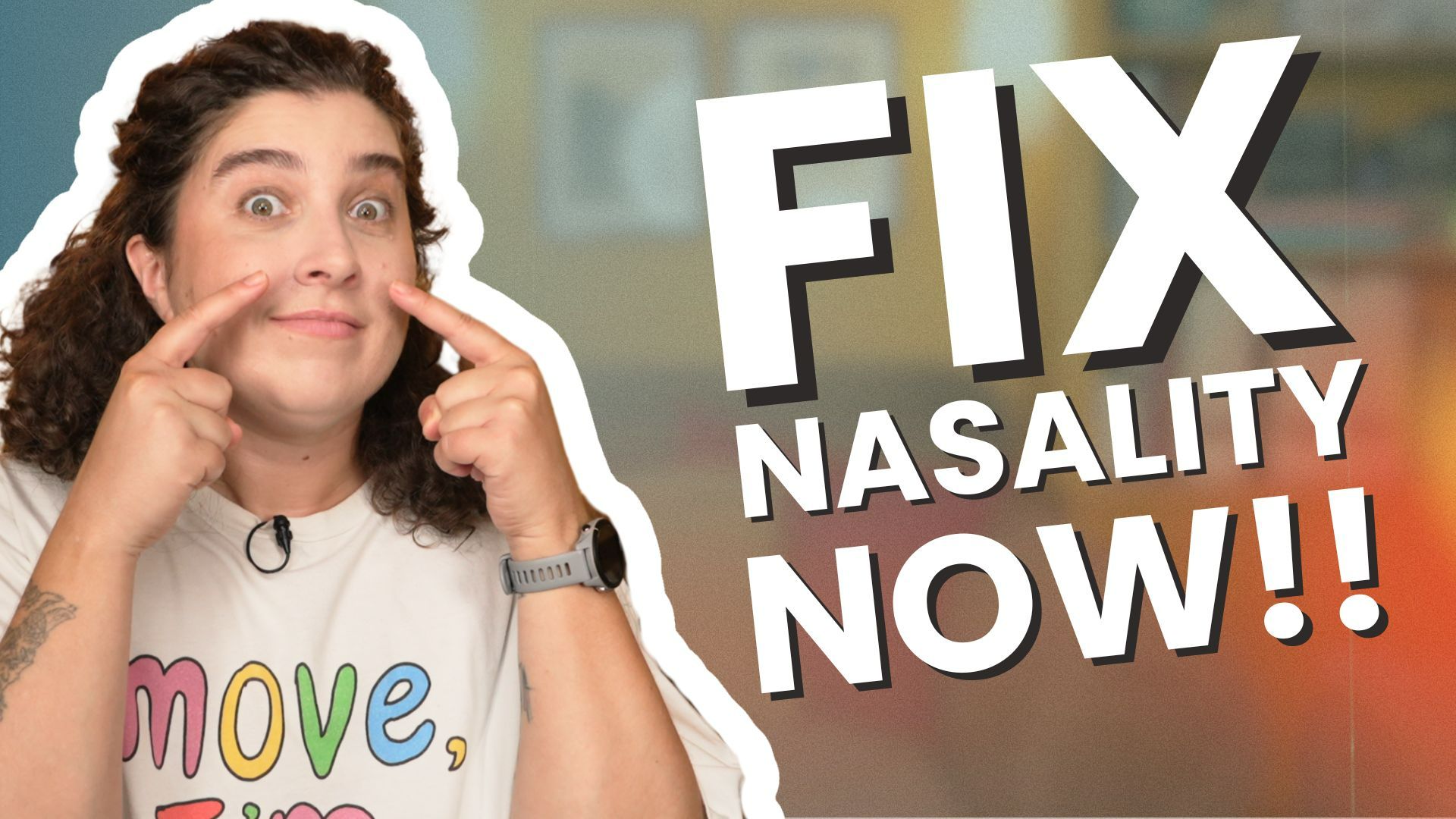
How to ACTUALLY Tell if Your Voice is Nasal
Access to Trans History and Research
Beyond voice technique, Shaynah valued the course's broader educational context.
"I am now reading Before We Were Trans by Kit Heyam," they mention. "And I usually bookmark stuff that I want to remember from books, and I'm only like one—I think I'm still in chapter one. I read the prologue and chapter one and I already have so many bookmarks out, like, 'Oh, finally! Yes, this is what I mean.'"
Reading about trans history and experiences felt deeply personal: "I'm reading about myself."
The Course as Foundation, Not Finish Line
For Shaynah, the six-week course served a specific purpose: showing what's possible to know and where to find it.
"This course was just an introduction for me," Shaynah reflects. "It showed me what there is to be known and it shows me where I can get the information if I want to get more information. And I'm so happy about that, because six weeks, that was not enough. We all knew it was not going to be enough."
Rather than expecting complete mastery, Shaynah values having a roadmap for continued learning.
Connect with Shaynah: Music, Teaching, and Community
Shaynah creates music to make sense of their world and emotions, then shares it to build community with others processing similar experiences.
"I create my own music to kind of make sense of the world around me and to make sense of myself," Shaynah explains. "Feelings are a vague mystery to me. And I write music to have conversations with myself, to know what I actually feel and how I actually think about something."
That vulnerability and authenticity shines through in their work, creating space for collective healing through shared experience.
You can find Shaynah's music and teaching at justshaynah.com, where you can subscribe to their newsletter for monthly updates. Follow them on Instagram, TikTok, and other social media platforms, but Shaynah especially values newsletter subscribers—"that's where the real stuff lives. And then I can actually be in community with you."
Seriously, go listen to the Naked EP. It's incredible.
Want to check out more amazing interviews?
The trans community is incredible and diverse. If you want to see more interviews with amazing trans educators, activists, entrepreneurs and more, check out the related posts below or check out my interviews playlist on YouTube.
Confidence, Storytelling, and Getting Paid (w/ Evolve Benton)
How a Trans Woman Found Her Voice (and Became a Voice Actress) with Amara Olimb-Kreh
Nonbinary Voice, Gender, and Safety in Mexico City: A Conversation with Sergio Carazo Cardona
And if you want to have me on your youtube channel or podcast, go ahead download my pitch deck on my interviews page or reach out through my contact form!
Conclusion: Making Space for Black, Autistic, Trans Voice Teachers
Shaynah's journey from The Voice Holland to trans voice training illustrates something important: we need more diverse voices in gender-affirming voice education.
As a Black, autistic, multilingual voice teacher, Shaynah brings perspectives that open up necessary conversations about accessibility, language, cultural differences in gender expression, and what it means to learn and teach across multiple contexts.
"I see the educational system is very white, and that could withhold me from entering it and becoming a teacher myself," Shaynah reflects. "But I hope that more people just take the leap and go for the information and then add all the other stuff. And I think there will be more of us if that just happens."
Whether you're a voice teacher, singing instructor, speech pathologist, choir director, drama teacher, or anyone who works with voices and wants to support trans people, Shaynah's experience shows what's possible when we create space for diverse learning styles and teaching approaches.
Applications for the 2026 cohort of Learn to Teach Trans Voice Alteration in Five Weeks open in January. Sign up for the waitlist to be the first to know when applications open. Whether you're coming from a music background, working across multiple languages, navigating neurodivergence, or simply want to support trans people in finding their authentic voices—there's space for you in this community.
Want to learn more about transgender voice training for yourself? Sign up for my free one-hour masterclass, Change The Gender of Your Voice: No Hormones or Surgeries Required, and discover how you can develop an authentic voice that feels like you.
Want weekly tips, resources, and insights on trans voice training? Sign up for my newsletter and get the latest content delivered straight to your inbox. It's free!