When Testosterone Doesn't Change Your Voice: A Transmasculine Voice Journey | Rey Katz on Speaking Freely
Apr 09, 2026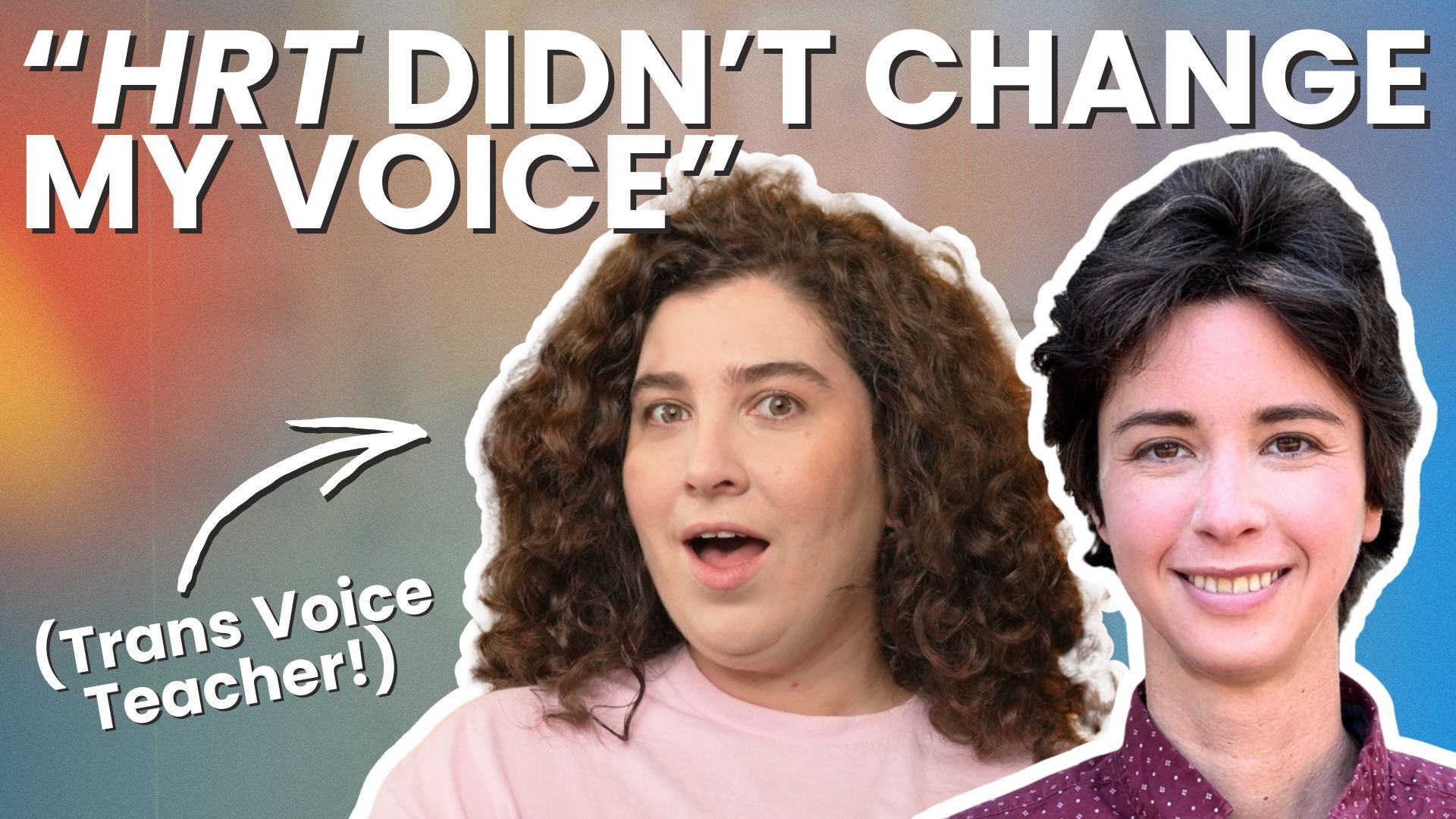
What happens when you start testosterone, expecting your voice to drop, and it mostly doesn't? That's just one of the threads in this rich, wide-ranging conversation with Rey Katz, a transmasculine nonbinary writer, advocate, and voice training student who has been part of this community for five years.
Rey is the creator of Amplify Respect, a weekly newsletter for trans people and allies that consciously skips the relentless news cycle in favour of compassion, community, and everyday trans joy. In this episode of Speaking Freely, we talk about writing as a trans person, what voice training actually looked like from the inside, and the complicated experience of navigating bathrooms while gender nonconforming.
This is a conversation that moved me. I hope it moves you too.
Table of Contents
- Watch the Full Video
- Meet Rey Katz
- Amplify Respect: Trans Joy as a Newsletter
- Why Newsletters Are a Radical Act
- Rey's Trans Voice Training Journey
- The Mindset Shift That Changed Everything
- Low-Dose T and the Voice That Didn't Drop
- The HuffPost Essay About Bathroom Harassment
- Speaking Freely: What Rey Wishes More People Understood
- Resources and Links
Watch the Full Video
Prefer to read? Keep scrolling for a full breakdown of the conversation.
Meet Rey Katz
Rey Katz is a trans masculine nonbinary writer, advocate, and Masculinize Your Voice Without Testosterone student who has been part of this community since 2021. They've been published in HuffPost, and their writing has a way of making people feel like they're not alone, whether they're just starting their gender journey or well into it.
Rey is also the creator of Amplify Respect, a weekly newsletter dedicated to uplifting and informing trans people and allies. It's been a joy to watch them grow as a writer, as an advocate, and as someone building an increasingly confident relationship with their voice.
Amplify Respect: Trans Joy as a Newsletter
Amplify Respect started as a personal blog where Rey shared their own experiences. As their gender journey deepened, the writing followed, and so did the audience.
"I realized how important it was for people to see experiences of people who are similar to them," Rey explained. "I had really gained a lot from being able to read trans memoirs and other people's experiences online. It really helped me understand a lot about myself. So I wanted to help put that out there for other people as well."
What sets Amplify Respect apart is its deliberate focus on the full picture of trans life instead of just the headlines. There are deep dives into issues facing the trans community, yes, but also stories about community care, everyday joy, and things like bird watching. (Yes, trans birding content. It is exactly as lovely as it sounds.)
Rey is clear that outlets like Erin in the Morning do essential work covering trans news and policy, but that Amplify Respect serves a different function. "If you don't want to see all the news, you don't have to," Rey said. "There's a lot to learn about being trans that is just everyday life and joy."
As Rey put it: being trans is about so much more than the current news cycle. The full, beautiful complexity of trans life deserves space too.
Why Newsletters Are a Radical Act
One of the threads I kept pulling on in this conversation was the newsletter format itself. Because I genuinely believe that direct email newsletters are one of the most resilient forms of trans community connection we have right now.
I've watched my TikTok audience disappear when the algorithm changed. The people who followed me there couldn't find me anymore unless they'd already found me somewhere else. The nature of algorithm-dependent platforms is that they can take your community away overnight.
A newsletter lands directly in someone's inbox without an algorithm or platform deciding who sees it. And as Rey pointed out, Amplify Respect has now moved off Substack (which has a documented history of financially supporting transphobic creators) and onto Ghost, a platform that sends content directly to subscribers without social media mechanics getting in the way.
"There's no algorithm getting in the way," Rey said. In a world where big tech consistently fails trans people, that directness is genuinely radical. It's one of the reasons I send my own newsletter too. If you're not already on my list, consider this your invitation.
Rey also wrote a piece on their own website about how their voice training journey intersected with the newsletter and you can read it here.
Rey's Trans Voice Training Journey
Rey and I met in 2021 when they enrolled in my very first course, Trans Vocal Exploration, which no longer exists, but whose work lives on in Masculinize Your Voice Without Testosterone. Over the following five years, they also completed that course as well.
When Rey came to voice training, they expected to learn how to change their voice entirely and sound completely different. What they found was something more foundational, and ultimately more transformative.
Masculinize Your Voice Without Testosterone
"A lot of the exercises were about just observing your voice as it is now, listening to what you were actually saying," Rey recalled. "Combined with going to office hours and talking to other trans people — understanding that there were other people going through a similar journey — that really helped me understand that I could accept my voice a little bit more."
This is exactly the philosophy I try to build into all my teaching: two things can be true at once. You can love yourself exactly as you are, and work toward making a change. These aren't in conflict. In fact, approaching voice training from a place of acceptance, rather than trying to fix something broken, tends to create a much more sustainable, joyful practice.
The Mindset Shift That Changed Everything
The acceptance piece, Rey said, was genuinely transformative for their practice. Learning to actually listen to their voice, rather than dissociate from it, made the technical work possible.
"As I was learning to listen more carefully to my voice and actually hear it, I was also doing work to try and change it," they explained. "To lower the pitch slightly, talk closer to the bottom of my range, express emotions differently, work on darker resonance."
And the change happened gradually, over years. So gradually, in fact, that Rey didn't fully register it until a moment with their old voicemail.
"My partner dialled my phone to find it. It was lost somewhere in the house, and I heard the voicemail message on his phone. It was so high and squeaky, I could not believe it. I was shocked that I used to speak like that. I was laughing so hard."
This is why I always encourage people to make recordings, even if they're not ready to listen to them. Put them away. Someday, you might be glad you did.
Low-Dose T and the Voice That Didn't Drop
Here's the part of Rey's story I think deserves the most attention because it's one we almost never hear.
Rey has been on low-dose testosterone for nearly two years. And their voice, largely, didn't drop.
"I feel like the majority of the changes in my speaking voice have happened because I've done exercises to work on pitch and resonance and things like that," they said. "And medication has done relatively, almost nothing."
This is genuinely rare to hear spoken aloud. There's a statistic from The Transmasculine Voice Book that about 15% of respondents to a survey did not experience a pitch drop on T, yet this experience is almost invisible in transmasculine spaces, where the narrative is overwhelmingly that testosterone will handle the voice.
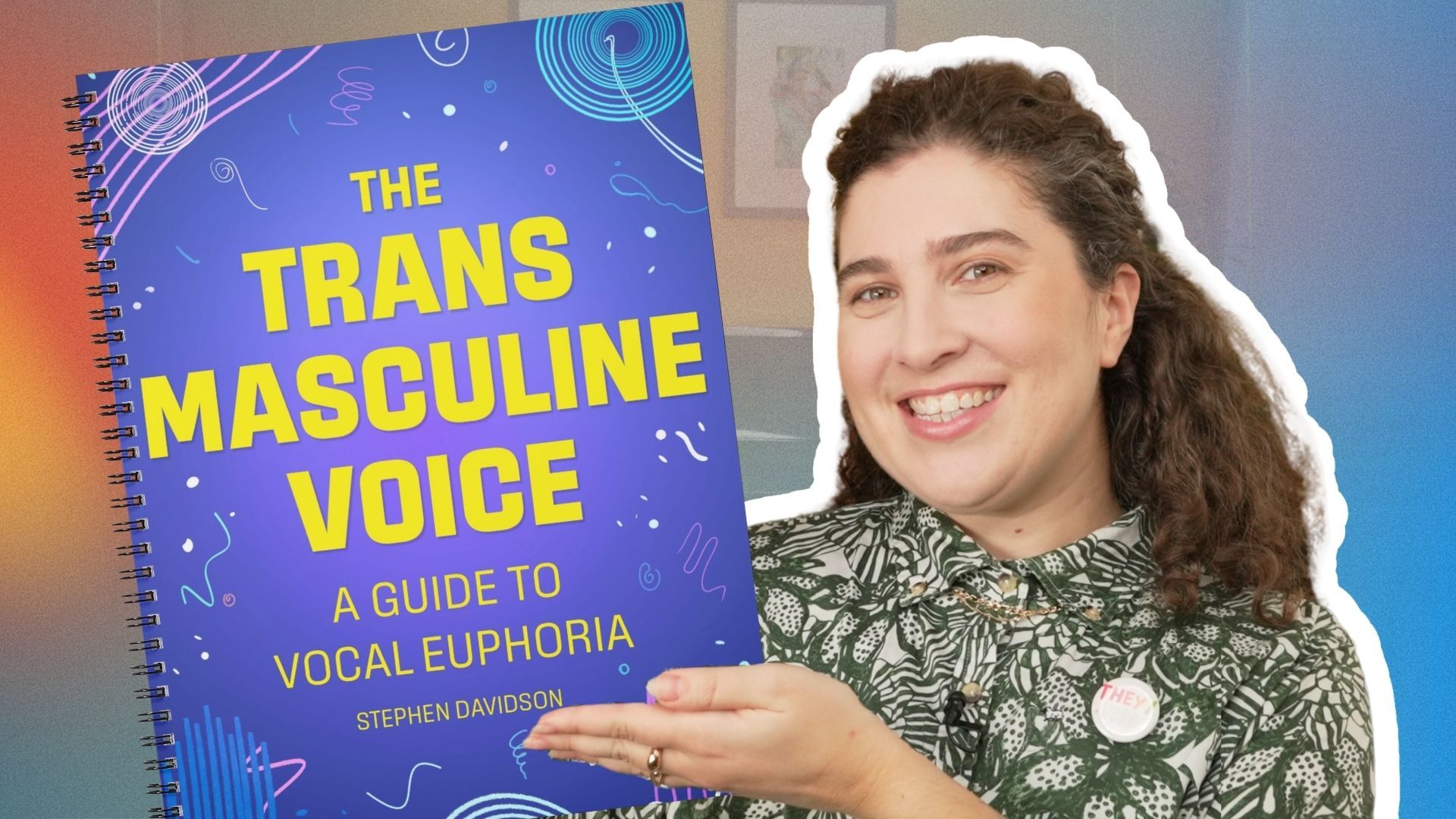
The ONLY Book Written For Transmasc Voice | Trans Voice Training Book Club Ep. 2
Voice training matters for trans masculine and nonbinary people regardless of hormone use. For some people, like Rey, it may be the primary path to vocal change. You can explore this further in my masculinization playlist on YouTube, or in the dedicated testosterone and voice playlist if you want to go deeper on how T does (and doesn't) affect the voice.
Here are some of my favourites:
Why Your Voice Goes “Customer Service Mode” (And How to Stop It)
The Secret to Sounding Masculine AND Expressive (You Don't Have to Choose)

How to Shout, Laugh, and Cough Like a Dude
Rey also noted that testosterone brought meaningful changes in other areas, such as reduced anxiety, greater presence in their body, and a sense of greater settledness. They've discussed the dose with their endocrinologist and chosen to stay where they are. In my opinion, that kind of autonomy (trans people choosing what works for them) is something worth celebrating.
And for what it's worth: Rey drew a comparison I found really clarifying. They pointed out that before starting T, they'd been on birth control pills for years, which is also a daily low dose of hormones. One is deeply normalized; the other is treated as terrifying. That asymmetry says a lot about whose medical care we've decided to treat as normal.
The HuffPost Essay About Bathroom Harassment
One of Rey's most widely read pieces is a personal essay published in HuffPost about being harassed in a public women's restroom. You can read Rey's account on their website.
The experience: Rey was in a bathroom stall when a man opened the door and called out, asking whether there was "a male or female" inside. Rey responded nervously, with just a "hello," and the man apologized and left. The situation was resolved, but the fear didn't disappear just because the outcome was okay. Rey had no way of knowing, in that moment, where it was going to go.
"I was still shaking," Rey said. "I didn't know where that was going to go."
What made the moment particularly complex was the role voice played in it. Rey's voice, not sounding traditionally masculine in that frightened, compliant moment, was, in a certain sense, what defused the situation. That's a genuinely difficult thing to sit with. There's no clean lesson to extract from it, no tidy conclusion about whether to train your voice one way or another for safety. It's more like a window into the impossible position so many trans and gender nonconforming people navigate every day.
The essay also resonated with a lot of cis women with short hair, who recognized the same kind of bathroom policing in their own lives. As Rey noted, the shape of the experience was similar, but the specifics matter. Rey is a transmasculine nonbinary person, and using the men's bathroom isn't a safe or simple option in most contexts.
This is one of the things I find so important about the current conversation around bathroom bills and policies. The premise that gendered bathrooms protect people ignores the many, many situations in which people of multiple genders are already sharing bathroom space: parents with young children, caregivers, gender nonconforming people of all identities. Trans people are not a threat in bathrooms. Trans people are targets in bathrooms. That distinction matters enormously.
Speaking Freely: What Rey Wishes More People Understood
At the end of every Speaking Freely episode, I give my guests the floor to say the thing they most want people to hear. I asked Rey: What's one thing you wish more people understood about trans and nonbinary voices—speaking voice, writing voice, or otherwise?
"I wish there was more trans representation in media," Rey said. "Trans people sharing a variety of voices."
They mentioned a scene from Pose in which a trans actress sings a duet, her voice lower than her male scene partner, and it's beautiful, and it's feminine, and it's completely her own. That moment stood out to Rey as exactly the kind of representation that expands what we think is possible.
"Just being able to hear more voices, showing what our bodies can do, and accepting those as nonbinary voices, or men's voices, or women's voices, is just really important, so people have a better idea of what's possible."
More trans voices in more places, in all their variety. That's the goal. That's what Speaking Freely is for.
Resources and Links
- Amplify Respect — Rey's weekly newsletter for trans people and allies (free to subscribe, paid upgrade available)
- Rey's bathroom harassment essay on Amplify Respect
- Rey's piece on voice training and content creation
- Erin in the Morning — daily trans news coverage
- Masculinize Your Voice Without Testosterone — Renée's course for transmasculine and nonbinary folks
- Masculinization playlist on YouTube
- Testosterone and voice playlist on YouTube
- Speaking Freely playlist — all interviews in the series
- More Speaking Freely posts on this blog
Want more of Speaking Freely? Here are some episodes I think you'll love:

Trans Icon, Transit Icon: Bernie Wagenblast
Singing on Testosterone: What Trans Singers Need to Know (Interview with Eli Conley)
Black, Autistic, and Teaching Trans Voice with Shaynah
If Rey's story resonated with you, whether you're on hormones or not, whether your voice is changing or staying the same, I want you to know that you're not alone, and there's a community here for you.
Go subscribe to Amplify Respect if you want a genuinely nice thing in your inbox every week. And if you're curious about what trans masculine voice training looks like, Masculinize Your Voice Without Testosterone is self-directed, fully online, and completely private so you can go at your own pace.
Want more conversations like this one? Browse the full Speaking Freely playlist on YouTube or explore the Speaking Freely posts right here on the blog. And let me know in the comments on the video above: who would you like to see on the show next?
Want weekly tips, resources, and insights on trans voice training? Sign up for my newsletter and get the latest content delivered straight to your inbox. It's free!