Trans People Are Older Than Rome | Sophie Edwards on Speaking Freely
May 14, 2026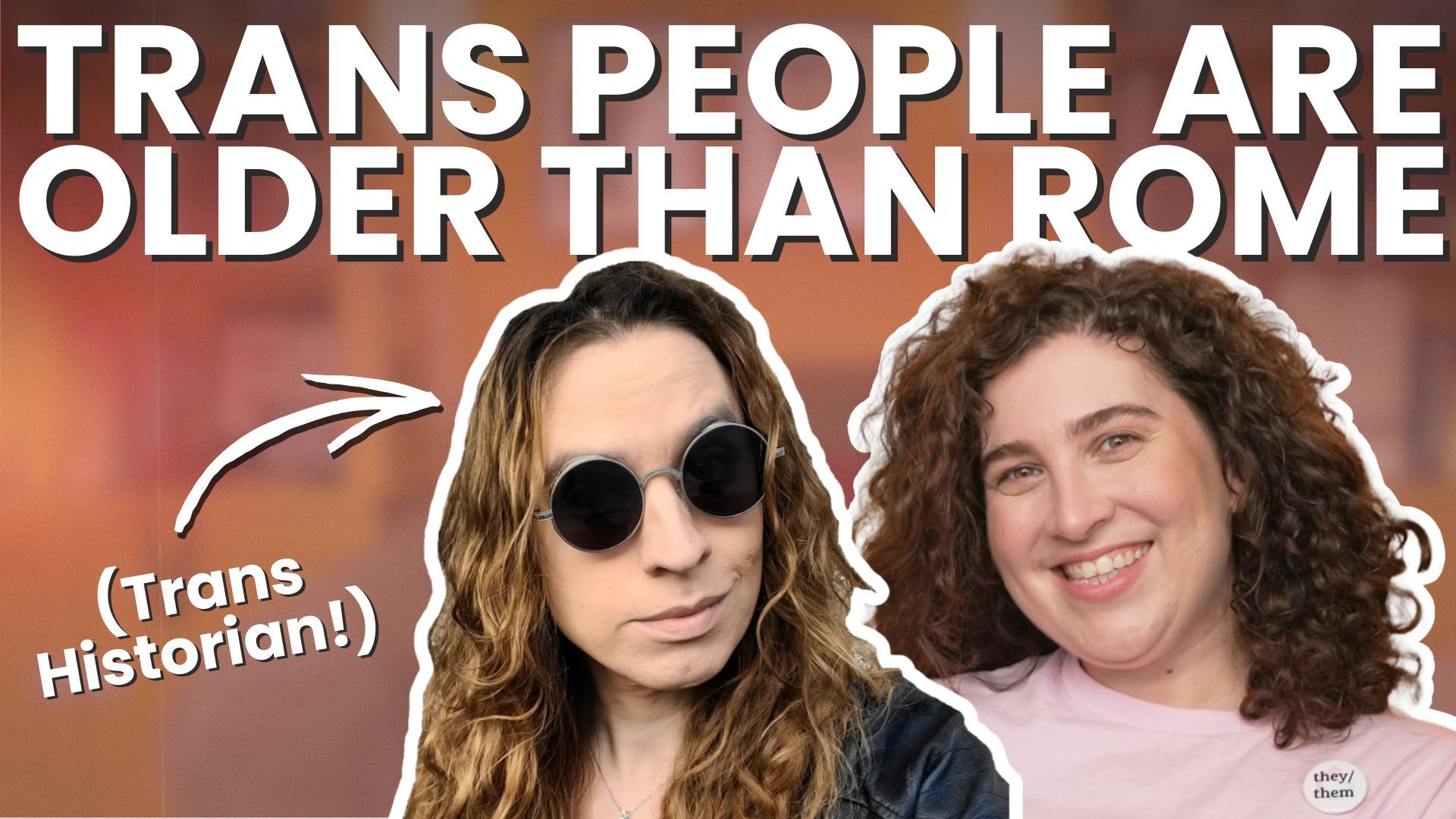
What if the story of trans existence stretched back not decades, not centuries, but millennia? That's the territory Sophie Edwards explores in her YouTube series We Have Always Existed, and it was the starting point for one of my favourite Speaking Freely conversations yet.
Sophie is a classical studies scholar, a voice feminization coach, and a fiction author. She brings a rare combination of academic rigour and genuine community investment to the question of transgender history in the ancient Mediterranean. In this episode, we talked about how she came to this work, why cisgender researchers have so consistently missed these stories, and the surprising through line between amplifying trans voices from the ancient world and helping living trans people find their voices today.
If you've ever wanted to feel more rooted in a trans history that goes back further than you probably imagined, this conversation is for you.
Table of Contents
- Watch the Full Video
- Who Is Sophie Edwards?
- Transgender History in the Ancient Mediterranean
- Intellectual Honesty When the Stakes Are High
- The Epistemological Messiness of Interpreting Transness
- Why Cisgender Researchers Miss These Stories
- How Sophie Became a Voice Coach
- A Gender Liberationist Approach to Voice Training
- We Have Always Existed
- Find Sophie Edwards
- More Speaking Freely
- Voice Feminization Resources
Watch the Full Video
Prefer to read? Keep scrolling for the full conversation.
Who Is Sophie Edwards?
Sophie Edwards started out in undergrad thinking she'd become a teacher—and in a way, she did, just not in the way she expected. She studied classical studies, a field that goes beyond conventional history to encompass literature, language, art history, archaeology, sociology, and political science, all focused on the ancient Mediterranean world.
After she began transitioning, Sophie started encountering conversations in trans communities about historical figures such as priestesses, myths, and ancient rituals that seemed to point toward trans existence long before the modern concept of transgender identity existed. She looked more closely and realized that no one was making this material accessible to everyday people. She had the background. So she did it herself.
The result is We Have Always Existed, a video essay series that brings rigorous, sourced, and genuinely engaging scholarship about transgender history to a popular audience. (If you love Verity Ritchie, PhilosophyTube, or Alexander Avila, you'll feel right at home.)
Alongside her history work, Sophie has spent five years as a voice feminization coach—a path she stumbled into when a speech therapist friend heard her voice and said, in essence, "you already know how to do this. You just don't know that you know."
Transgender History in the Ancient Mediterranean
When Sophie talks about transgender history in the ancient world, she's not projecting modern identity labels onto people who lived thousands of years ago. She's doing something more nuanced: asking whether people in those societies were transgressing or stepping outside the gender boundaries of their time.
One of the clearest examples she returns to is the Galli, the priestesses of the goddess Cybele. Sophie has argued extensively that the Galli are among the most unambiguous examples of trans people in the ancient world. They lived as women, and many underwent what we might today understand as genital surgery as part of their devotion. And yet cisgender researchers have repeatedly interpreted them as simply "men who felt a strong call to worship Cybele."
As Sophie noted in our conversation, most people who feel called to worship a deity don't do what the Galli did. The interpretation reveals more about the interpreter than the historical subject.
This is the kind of close, critical reading that makes Sophie's work so valuable and so different from more casual treatments of trans history you might encounter online.
Intellectual Honesty When the Stakes Are High
I asked Sophie how she maintains intellectual rigour when the stakes for trans people are so high right now, when it can feel tempting to reach for any piece of historical evidence that validates our existence.
Her answer was clarifying. She made a point worth sitting with: even if trans history didn't exist, that would not invalidate us. She's wary of the implicit logic that says our existence is only acceptable because we've always been here, because that logic mirrors the older gay rights framing of "it's not a choice," which can slide uncomfortably close to "and therefore it's not our fault." Trans people don't need a historical alibi.
That said, trans history does exist. And Sophie's commitment to intellectual honesty is, in her words, less a virtue than a necessity. As a trans woman working in a scrutinized field, she doesn't have the same luxury as cisgender researchers to casually cherry-pick whichever historical representation suits her narrative. She has to show her work.
Her practical advice for anyone wanting to engage critically with trans history: look for people who cite their sources. Be wary of anyone who presents themselves as a general authority across all of human history. Favour researchers who tell you where their arguments are coming from and who show their receipts.
The Epistemological Messiness of Interpreting Transness
Here's the honest complexity at the heart of this work: nobody 2,000 years ago identified as transgender. But then again, 2,000 years ago, nobody identified as cisgender either. Or gay. Or straight. Those concepts didn't exist.
So how do we talk about transness in historical contexts without either over-claiming (insisting someone "was trans") or under-claiming (refusing to see what's plainly there)?
Sophie draws on historian Susan Stryker's framework: rather than asking whether someone identified as transgender (an anachronistic question), we can ask whether they transgressed or stepped outside the gender boundaries of their own society. That's a question we can actually investigate. And the answers are often, remarkably, yes.
This framing sidesteps the endless hand-wringing that, as Sophie pointed out, leads cisgender literary researchers to question whether Sappho was a lesbian. It allows us to say something meaningful about the past without pretending that modern identity categories are timeless.
Why Cisgender Researchers Miss These Stories
Sophie identifies three overlapping reasons why transgender history in the ancient world has been so consistently overlooked or erased by mainstream scholarship.
The first is simply time. The older something is, the less likely it is to survive. Centuries of societal change, war, and the casual discarding of things whose value went unrecognized have created enormous gaps in the historical record.
The second is a failure of interpretive imagination or not knowing how to recognize transness when you encounter it, filtered through what Sophie calls a kind of cis-supremacist assumption that being cis is the default and anything else is an aberration. This isn't always malicious. Often it's unconscious bias, the same bias that leads researchers to reach for the most "normal" explanation for behaviour, that is, if you look at it plainly, anything but.
The third is active censorship. Sophie talked about the Gabinetto Segreto, the Secret Museum in Naples, a wing that housed explicitly erotic artifacts excavated from Pompeii and Herculaneum and was kept closed to the public until 2000. Anything related to queerness was caught up in a broader Victorian squeamishness about sex in the ancient world, and a lot of material was deliberately hidden or destroyed.
The picture that emerges is of a historical record that has been filtered, misread, and sometimes actively scrubbed, and of scholars like Sophie doing the painstaking work of recovering what remains.
How Sophie Became a Voice Coach
Sophie's path into voice coaching is a good story. She had a friend who was a speech therapist who didn't know Sophie was trans. When it eventually came up, her friend was stunned. She'd had no idea, and she wanted to understand how Sophie's voice worked the way it did.
Sophie, for her part, had no idea her voice was anything remarkable. She thought it was "kind of clocky" and doing its best. But her friend ran a speech therapy clinic and wanted Sophie to work with her trans clients. Sophie's response: I don't know how to do that. Her friend's response: Yes, you do. You just don't know it yet.
Five years later, Sophie is still doing the work.
A Gender Liberationist Approach to Voice Training
This is where Sophie's history work and her voice work converge.
Sophie holds what she calls a gender liberationist view of voice training: if you're a woman, your voice is a woman's voice. If you're nonbinary, your voice is a nonbinary voice. This is also what I believe and teach.
But Sophie is also honest about the tension between affirming someone's internal gender and acknowledging the external reality they have to navigate. Being misgendered on the phone is real. Being misread at a restaurant is real. Wanting your voice to more consistently communicate who you are to the world is a completely valid goal, and helping someone work toward that isn't a contradiction of the first principle but an extension of it.
As I put it in our conversation, there are two goals. The voice that satisfies you, and the voice that lets you move through the world with the most ease. Sometimes those are the same thing. Sometimes they're not, and that tension deserves honest acknowledgment rather than easy reassurance.
For Sophie, this philosophy is inseparable from her history work. The trans people she studies from thousands of years ago were, in their own way, fighting to be heard. The trans people she coaches today are doing the same thing. Trans voices, past and present, matter.
We Have Always Existed
At the end of every episode of Speaking Freely, I ask my guest to speak freely and share something they wish more trans people knew.
Sophie didn't hesitate.
"We have always existed. As far back as I've been able to look, we've found things that can be interpreted as trans. There's no reason to believe that a world where people existed but trans people did not has ever been real or will ever be real. So long as humanity continues to endure, so too shall we."
That's the thesis of her channel. It's also, I think, a kind of medicine for this particular moment, when trans people are being told from many directions that we are new, we are invented, we are a trend that will pass.
We are older than Rome. We have always been here.
Find Sophie Edwards
You can find Sophie's work at all the links below.
- Website: sbedwards.co
- YouTube: We Have Always Existed
- BlueSky: @TransgenderHistory
- Instagram: @transgender.history
More Speaking Freely
Speaking Freely is an interview series about trans voice, trans advocacy, and trans liberation. Check out more episodes below or browse the full Speaking Freely playlist on YouTube.
Trans Icon, Transit Icon: Bernie Wagenblast
How a Trans Woman Found Her Voice (and Became a Voice Actress)
How to Choose the Right Trans Voice Provider (Advice from Nora Mahon)
Voice Feminization Resources
If this conversation has you thinking about your own voice, here are some places to start.

Mindful Voice Feminization
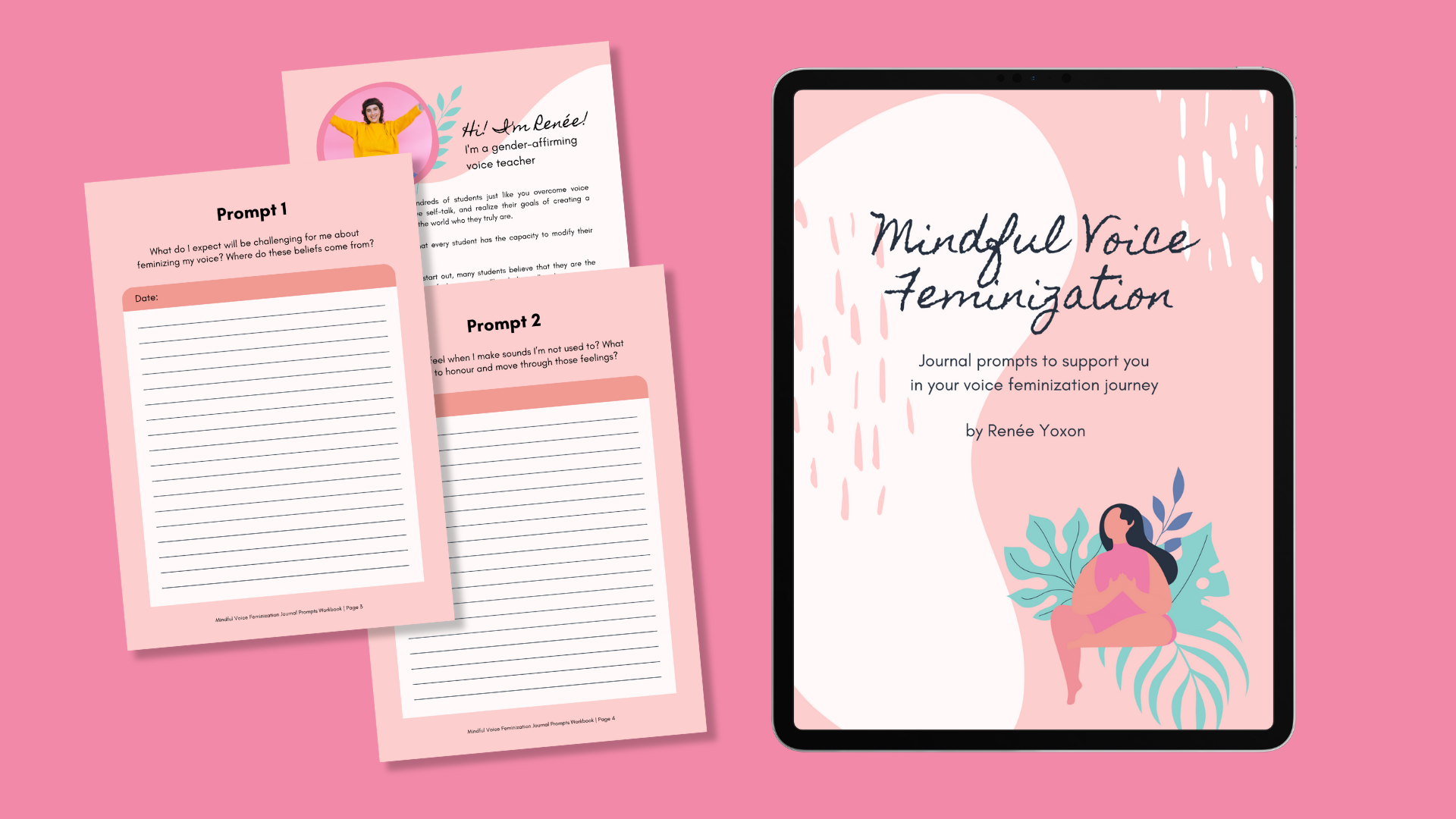
Voice Feminization Journal
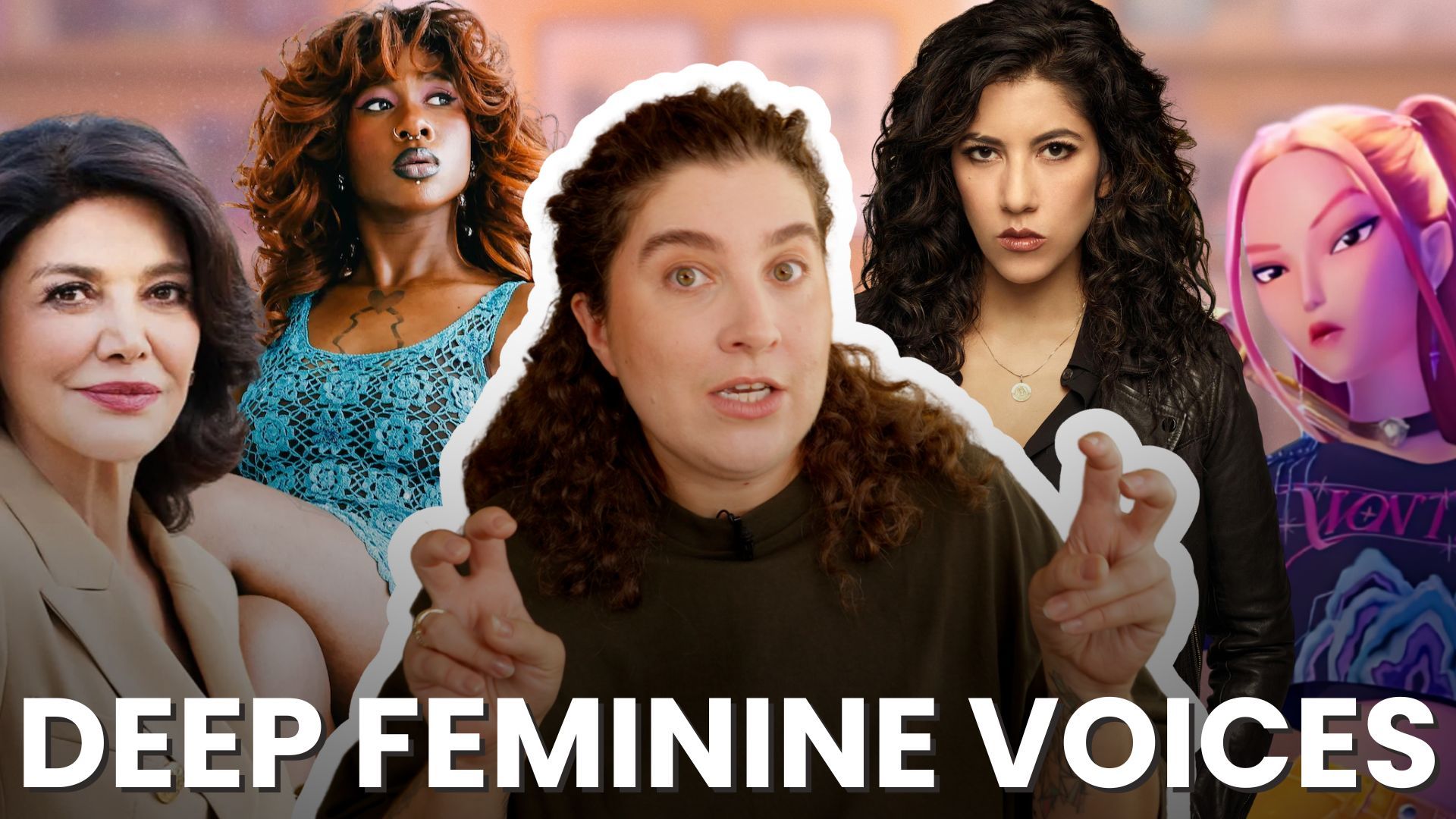
How to Achieve a Deep, Low, Dark Feminine Voice: A Complete Guide
Feeling inspired to explore your own voice? Join me for my free one-hour masterclass, Change the Gender of Your Voice (No Hormones or Surgeries Required), and take your first step with a gender-affirming voice teacher who gets it.
Want weekly tips, resources, and insights on trans voice training? Sign up for my newsletter and get the latest content delivered straight to your inbox. It's free!