Voice Games Review: Is This Trans Voice Training App Worth It?
Sep 24, 2026
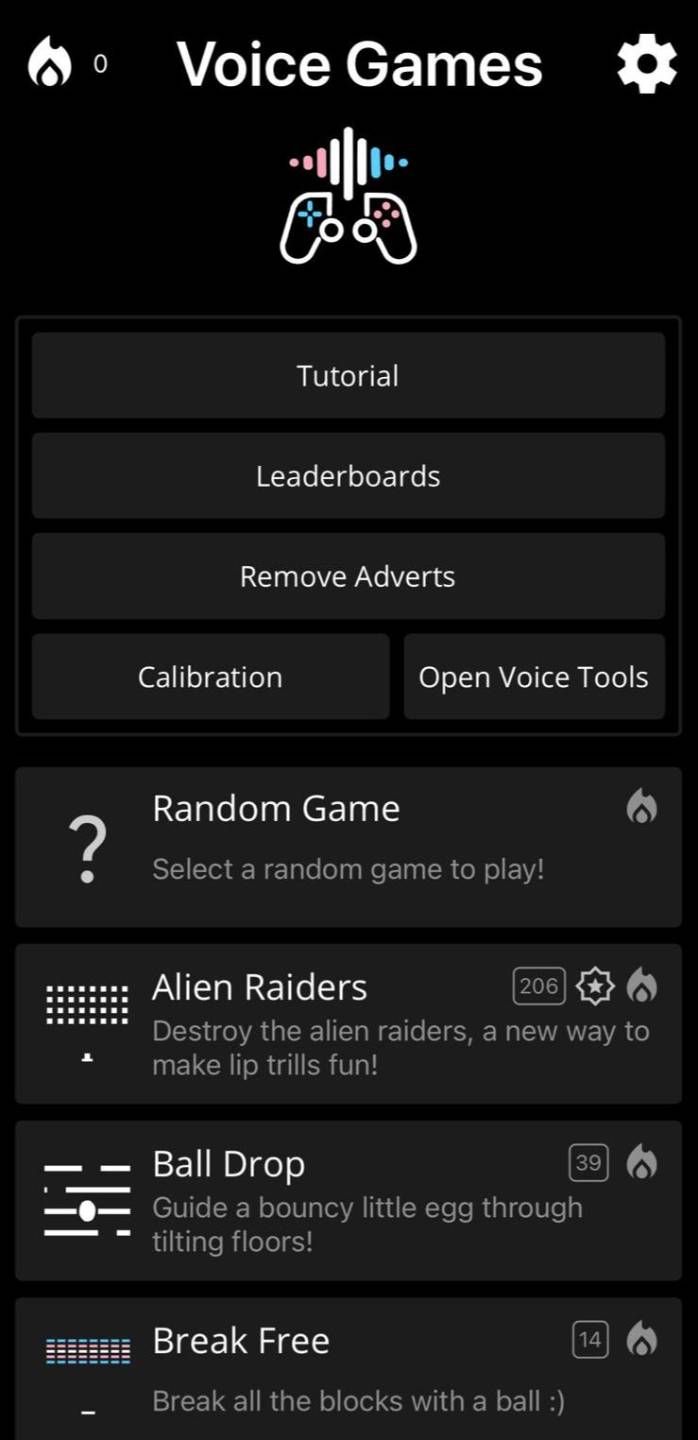
The makers of Voice Tools, the most ubiquitous trans voice training app out there, have done it again. Their new app, Voice Games, is a collection of arcade-style games you control with the pitch of your voice: steer a spaceship, tilt a floor, or stack falling blocks, all by going higher and lower.
If you've been around my channel for a while, you'll know I've gone on record as a certified Voice Tools hater. Even so, I admitted that Voice Tools has good use cases in You're Using Voice Tools Wrong (psst, it's about avoiding the app's rigid, binary assumptions about gender, whether you're a binary trans person or not).
So when a new app shows up promising to make pitch practice fun, it's fair to wonder whether it will help your voice or just hand you a new way to feel bad about it. In this post and the video that goes with it, I walk through Voice Games from first launch to the very last game and give you my verdict, so you can decide whether it's the next tool you need for your trans voice training.

You’re Using Voice Tools Wrong
Watch the Full Video
The video shows me playing Alien Raiders and Ball Drop, plus a quick supercut of the other games, so it's the place to go if you want to see and hear them in action. Prefer to read? Keep scrolling for the full review.
What Is Voice Games?
Voice Games is a free app from DevExtras, the developer behind Voice Tools, and its store listing describes it as a companion to Voice Tools. You can get it on the App Store for iPhone and iPad, or on Google Play for Android.
Every game runs on pitch. A higher pitch moves the controller up or to the right, and a lower pitch moves it down or to the left. The games are free to play, with an ad after each one.
The App Store listing says Voice Games is perfect for:
- Singers and musicians building vocal control.
- Voice feminisation/masculinisation or speech therapy practice.
- Developing pitch control, improving vocal range, and making speech therapy fun.
- Anyone wanting to strengthen pitch awareness in a fun way.
So is it actually good for all those things? That's what the rest of this review is about.
One note before we start: the game list varies a little by platform. At the time of writing, the Google Play listing names fewer games than the App Store one, so what you see on Android may differ from what I played.
Where Feedback Tools Fit in Trans Voice Training
As a gender-affirming voice teacher, I'm not at all against a feedback tool like a tuner, which is essentially what both Voice Tools and Voice Games are.
Let's face it, we've all become so used to instant feedback and metrics that we want the same thing for our voice practice. Especially at the beginning, it can be really comforting to have someone, or in this case something, tell you whether you're right or wrong.
Where I get into a little bit of a snit is that Voice Tools overemphasizes pitch as the most important measure of success in trans voice training. I go into this in a lot of detail in my Voice Tools review.
Voice Games was always going to have the same problem, because it's explicitly about playing games by changing your pitch.
Reviewing Voice Games From a 201 Perspective
So for this review, I'm assuming you've already done your homework. You've read The Ultimate Guide to Trans Voice Training or another in-depth introduction to voice training, and maybe you're even a student in one of my courses.
Think of this as a 201 class. You've started analyzing your voice and voices you love, and you've worked with resonance, vocal weight, and inflection. With all of that in place, you've decided that what matters most for your voice right now is changing the range of pitches you use when you speak.
Can Voice Games help you do that?

The Ultimate Guide to Trans Voice Training
Setting Up Voice Games: Choosing Your Vocal Range
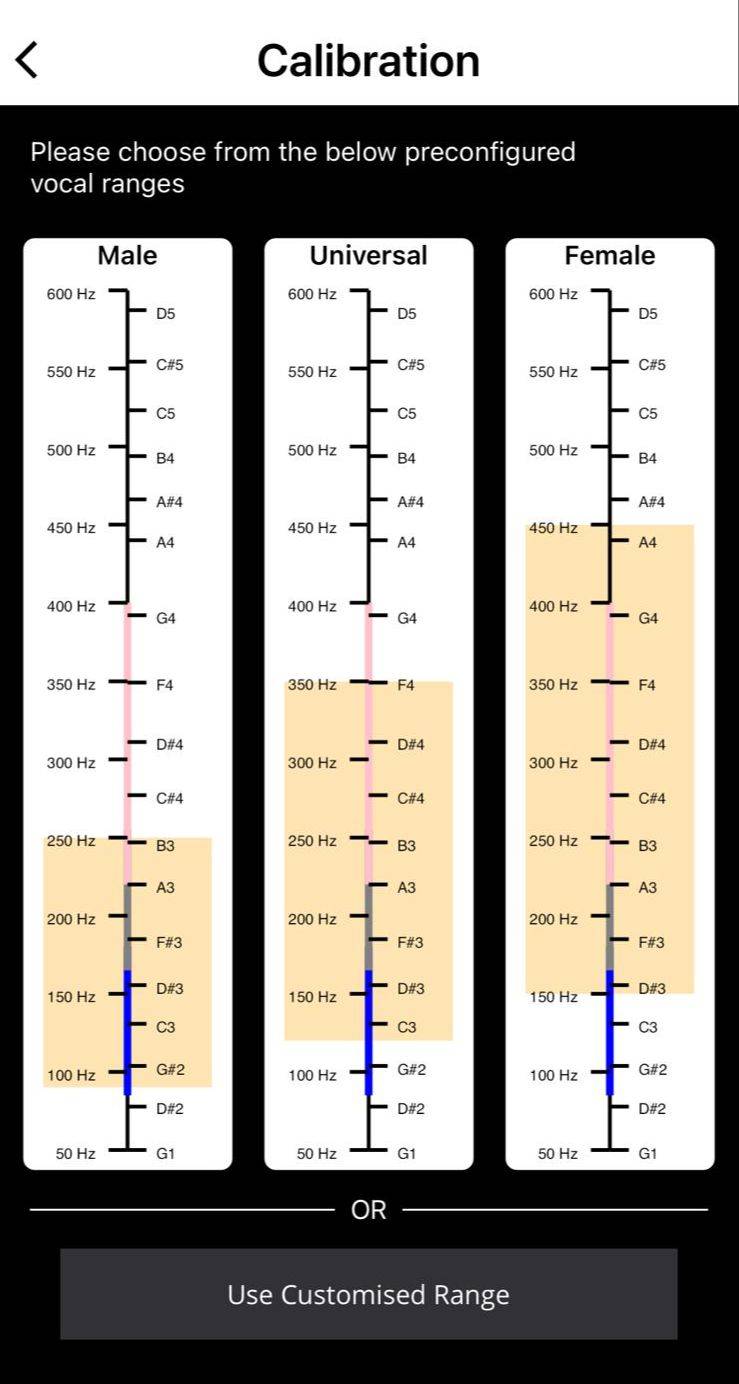
When you first open Voice Games, it asks you to calibrate your vocal range by making a comfortable high sound and a comfortable low one. You can also choose from preset ranges labelled female, male, and universal, or use a customized range.
Right away, I didn't love this. I found it confusing, especially the male and female language, and I wasn't sure what I was supposed to choose. Should I pick my ideal range, or the range I'm in now and want to change? (If you're asking yourself the same question, Gender-Affirming Voice 101: Pitch covers how to think about a target pitch range.)
I chose one of the presets to get started. Then I tried to apply a customized range, and it didn't work. After I calibrated and pressed apply, there was no way to move forward, pressing reset did nothing, and I ended up back on the preset screen.
Later, I went back and got the custom range working. Still, it doesn't inspire much confidence that such a basic function of the app is this glitchy. It should be the first thing that gets deliberately bug-tested.
Why Your Pitch Range Should Be Your Own
For trans voice students, being able to customize the pitch range you work in is one of the most important features in an app like this, if not the most important. Spoiler alert: that was also the big takeaway from my Voice Tools review.
Prescriptive male and female ranges are a bit reductive, considering the vast differences in how people speak. Speakers of different languages use measurably different pitch ranges, as one comparison of English and German speakers found, and average speaking pitch can even shift over time: a study of Australian women found that women recorded in 1993 had significantly deeper voices than women the same age recorded in 1945. So if you use Voice Tools or anything like it, please always customize your range.
I do think it's an improvement that the male and female ranges in Voice Games actually overlap, which they don't in Voice Tools. I'd still love to see a way to type a custom range by hand, as you can with your own targets in Voice Tools. You may not be able to sing your target range yet, but if you know your targets and have written them down, you should be able to add them.
Alien Raiders: Focus and Pitch Awareness
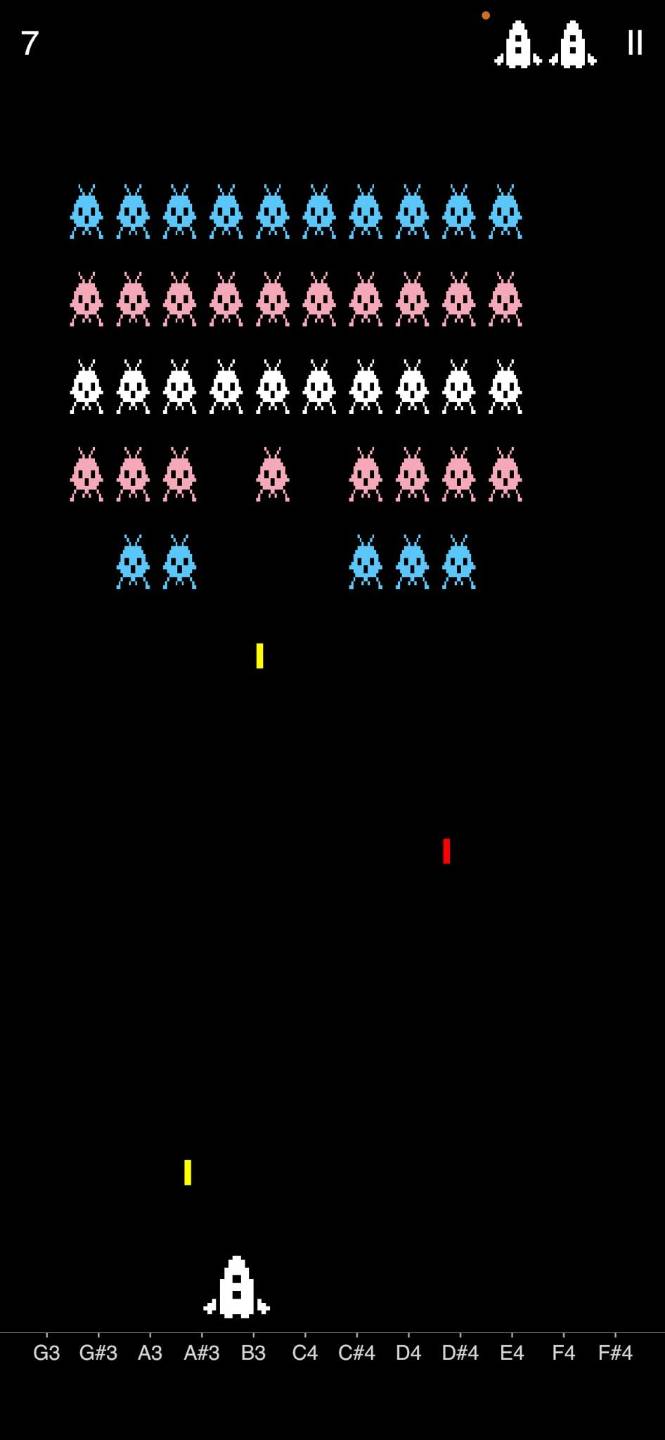
With setup out of the way, the first game I played was Alien Raiders. You steer a gunship with your pitch, it fires automatically, and the raiders fire back. The app bills it as "a new way to make lip trills fun."
I was completely locked in on that little ship. If distraction has been an issue in your voice training, a game like this could be a useful strategy.
I also think this kind of game could help people who have a hard time telling high pitches from low ones at first. If you're coming into trans voice training thinking, "I'm literally tone deaf, how the heck am I going to work on my voice??", a game like this could be a nice confidence booster that shows you have more control than you realize. (And if matching pitch feels impossible, How to Match Pitch Like a Pro was written for exactly that worry.)
That said, if you can't control the spaceship, the game could end up hurting your confidence instead, and we don't want that. If that happens, remember that it says more about the game than about your ability to change your voice.
Use Lip Trills to Turn Voice Games Into Breath Practice
I liked Alien Raiders a lot more once I switched from singing on "ah" to lip trilling, because the game suddenly became more of a breath control challenge.
A lot of singers and voice students struggle at first with keeping their breath even, and one way we practice that is with sustained lip trills. To do one, let your lips rest together loosely, blow air through them so they flutter like a motorboat, and add some voice underneath. You can hear me demonstrate one in the video. (Lip trills also appear in the voice section of Build Your Own 5-Minute Voice Warm-Up, if you want to make them a habit.)
Once you can sustain a lip trill on a single note, a game like this challenges you to keep your air pressure even while the note moves, which adds a whole extra level of difficulty.
The game doesn't suggest any of this to you, so consider this your nudge.

Ball Drop: Practice Speaking Real Sentences
Next up was Ball Drop. You tilt a series of floors with your pitch to roll an egg through the gaps and down to the next floor.
If you play on sustained notes, you'll quickly work out which two notes tip the floors, and after that, the game doesn't ask much more of you. I really started to like it once I realized I could play by speaking sentences instead.
One of the biggest hurdles in trans voice training is being brave enough to practice actual speech, and this game could be a great way to get over it.
Not sure what to say? Talk through your plans for the day (in the video, I tell the egg all about a trip to the store for eggs and bacon), or work through a list of things you say all the time, like the one in Using Common Daily Phrases to Practice Your Trans Voice.
Pitch Flexibility and Multiple Speaking Voices
Ball Drop could also help you practice vocal flexibility. To tip the floors, I had to speak lower and then higher, again and again.
That's less useful if you only want to speak higher or lower. But if you want a voice you can easily jump into depending on the situation, or you're developing more than one speaking voice for whatever reason, the pitch flexibility this game encourages could be really positive. (Training more than one voice is absolutely possible, and I dig into it in Embracing the Possibilities: Training Multiple Speaking Voices for Genderfluid Folks.)
So, nonbinary folks, if you're curious about this app, Ball Drop is a good one to try first. And if you're designing a nonbinary voice, you might also like my course, Mix & Match: Designing Your Nonbinary Voice.
The Other Seven Voice Games at a Glance
The remaining seven games work the same basic way as the first two. You either control them with long sustained notes, or you can use short notes or speech to move a paddle, a snake, a maze, or falling blocks. They're all fairly sames-y, so I'll keep this quick.
- Break Free: a brick-breaker where your pitch moves the paddle. Sustained notes worked better for me than speech in this one.
- D0ng: a Pong-style game where your pitch moves a paddle to keep the ball in play, with bonus points for beating the computer's paddle. The paddle felt a bit jumpy for me, even on a steady note.
- Hum Hero: a Guitar Hero-style game where you hum the notes as they drop. I think it would be more fun to sing along with actual music.
- Match the Pitch: hold the tone shown on screen for a few seconds to score a point. I wish it played the tone for you to match. With speech, it can show you roughly where you're speaking (around an E4, for example), but you can't choose the target note.
- Maze: rotate a circular maze with your pitch to guide a ball out through each ring. It works a lot like Ball Drop and is gentle enough to play with speech.
- Snake: raise your pitch to turn right and lower it to turn left. I found this one the hardest to control.
- Stack the Blocks: a Tetris-style game where your pitch sets where the next block lands, and the block drops when you stop making sound.
My two favourites overall were Ball Drop and Maze, and they're also the two that work best with speech.
Voice Games Features: Pitch Guide, Leaderboard, and Streaks
A few other features stood out:
- Pitch guide: you can turn on an on-screen pitch guide in notes or Hertz. It only shows up in games where it makes visual sense, and when it's on, you're essentially looking at a tuner.
- Leaderboard: you can turn the leaderboard on or off. I recommend off!
- Streaks: the app tracks whether you've played a game every day. That kind of thing can be very positive for building and keeping habits, so I'm very pro-streak if that's your thing. If a broken streak starts making you feel bad, though, let it go.
- Breathing breaks: the app prompts you to take a break and breathe while you play. That's a nice touch.
- Instrument mode and noise cancellation: in the settings, you can play with an instrument instead of your voice (handy for copying notes from a piano), and you can turn on noise cancellation.
- Ads: the games are free, with an ad after each one, and there are a lot of them.
If the playful side of Voice Games is what appeals to you, the posts below have more ways to bring games into your practice. Or check out my Practice Games e-book!
Practice Games For Endurance
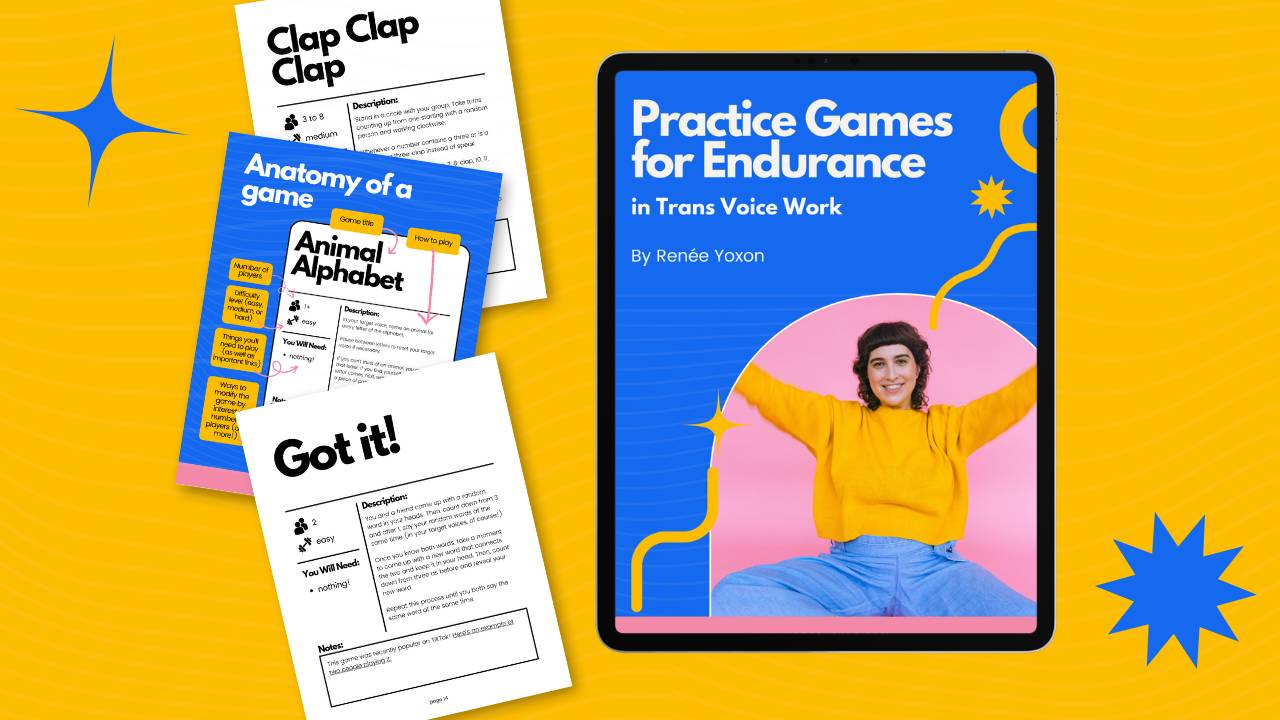
This workbook will teach you easy games that will help you maintain your target voice for longer.

Enhancing Your Trans Voice Training Through Gaming
Trans Voice Training for the Real World: A 3-Minute Practice-Along
Gamify Your Habits With Habitica
Tips for Using Voice Games in Your Trans Voice Practice
If you decide to give Voice Games a go, these will help you get more out of it:
- Set a custom range before you play, based on your own goals rather than the male or female presets.
- Play somewhere quiet. The app warns that the games won't work in a noisy room, and I noticed at least one game reacting to background noise.
- Try lip trills or closed-lip hums instead of "ah." The app itself recommends closed-lip sounds like "hmm," since they tend to be easier on your throat.
- Once sustained notes feel easy, switch to speech in Ball Drop and Maze.
- Turn on the pitch guide in the games that support it, so you can see where you are.
- Turn the leaderboard off, and let a streak go if it stops feeling good.
- Keep a glass of water nearby, and take the breathing breaks when the app offers them.
The Verdict: Is Voice Games a Good Trans Voice Training App?
Who Will Voice Games Help?
I think Voice Games could be very positive for people just starting out who have never experimented with any quality of their voice and want to learn to tell pitches apart. I also think it could be great for practicing breath control on a hum or a lip trill.
Does the app guide you toward either of those uses? No.
Will It Train You to Hold a Pitch Range?
Also no, not really. Funnily enough, I think Voice Tools (on the App Store and Google Play) is the far better tool for that. If you want to change your speaking voice, you have to practice speaking, and Voice Tools gives you preloaded practice sentences plus live tuner feedback with a slight delay, so you can see the overall shape of each sentence.
If you'd rather use something free in your browser, the Vocal Pitch Monitor I cover in Exploring Online Tuners for Trans Voice Work also shows your pitch across a whole sentence.
Should You Give Voice Games a Try?
Yeah, sure! I'm absolutely for any and all voice experimentation, and although the app has a lot of ads, it's free to use, so there's no harm in trying it.
I'll add one thing, though. If an app is going to earn ad money from trans users, I'd like to see a bit more effort go into polishing the product first.
Pitch Is Only One Part of Your Voice
I want to come back to the point I made at the beginning. Pitch is only one characteristic in your vocal palette, and for your goals, it may not even be the most important one. Resonance, vocal weight, and inflection all shape how your voice comes across, and there's so much to dig into beyond pitch.
If you haven't been getting the results you want, hyper-focusing on pitch may be why. My Gender-Affirming Voice 101 series breaks down each characteristic, and these three are a good place to start.
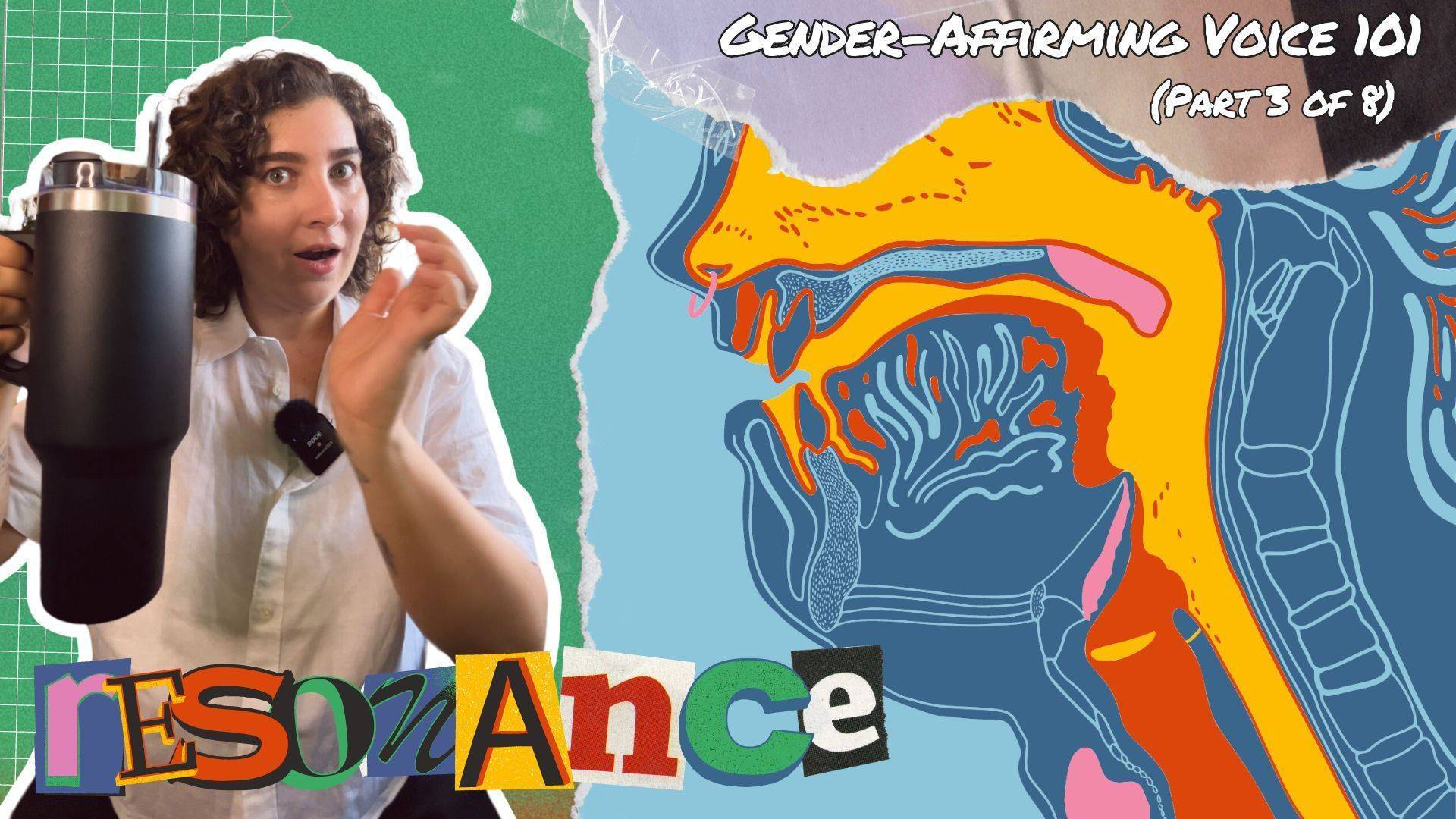
Gender-Affirming Voice 101: Resonance
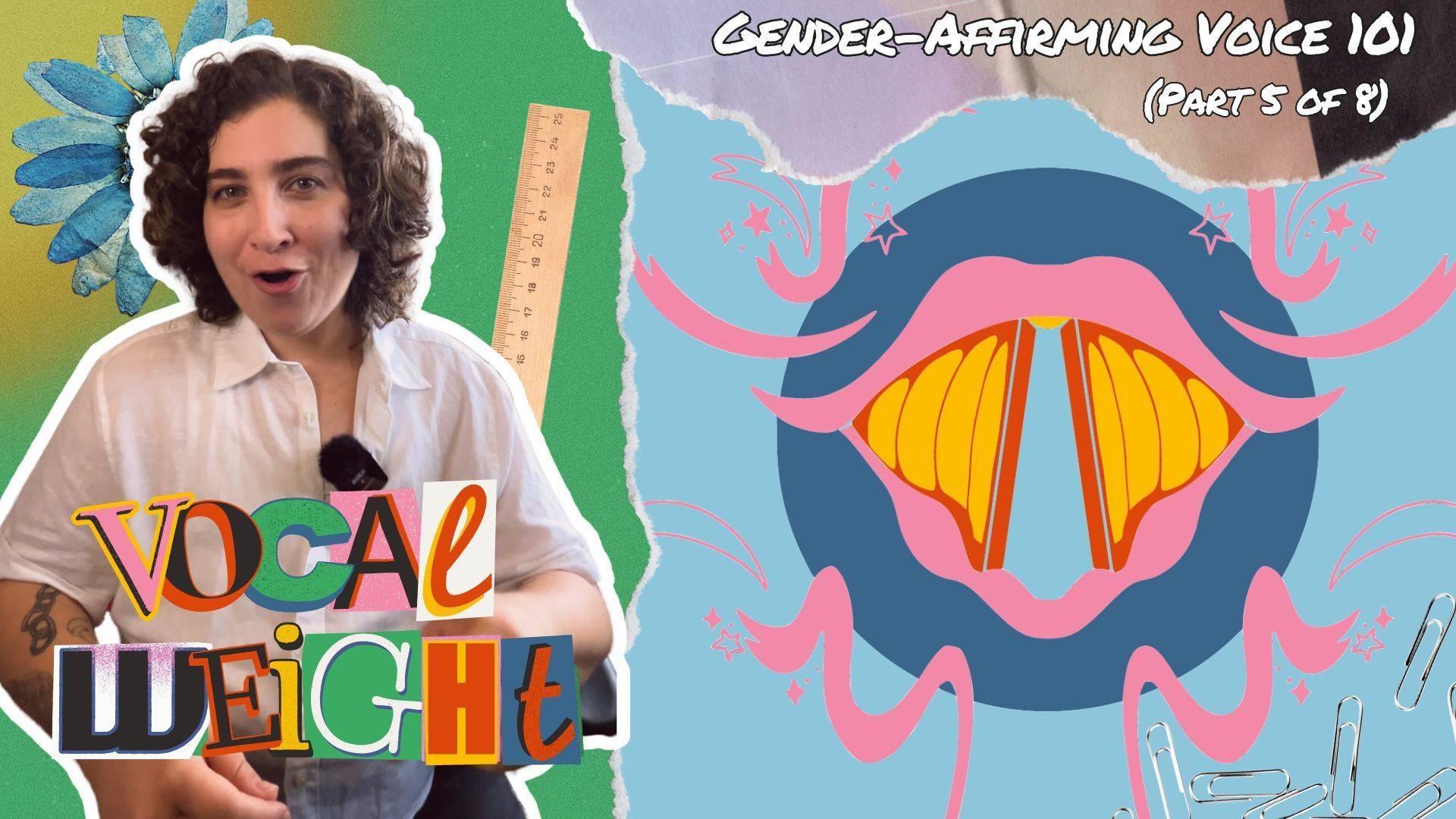
Gender-Affirming Voice 101: Vocal Weight
Gender-Affirming Voice 101: Inflection
Conclusion: Where Voice Games Fits in Your Practice
Voice Games is a free, playful way to experiment with pitch, practice telling high from low, and work on breath control, and Ball Drop and Maze can get you speaking out loud with a lot less pressure. It won't teach you to hold a pitch range, though, and it has nothing to say about resonance, vocal weight, or inflection.
If you'd like to see how all four fit together, my free masterclass, Change the Gender of Your Voice, walks you through pitch, resonance, vocal weight, and inflection, with no hormones or surgery required.
Want weekly tips, resources, and insights on trans voice training? Sign up for my newsletter and get the latest content delivered straight to your inbox. It's free!