What Beyoncé Can Teach Us About Trans Voice Training
Oct 08, 2026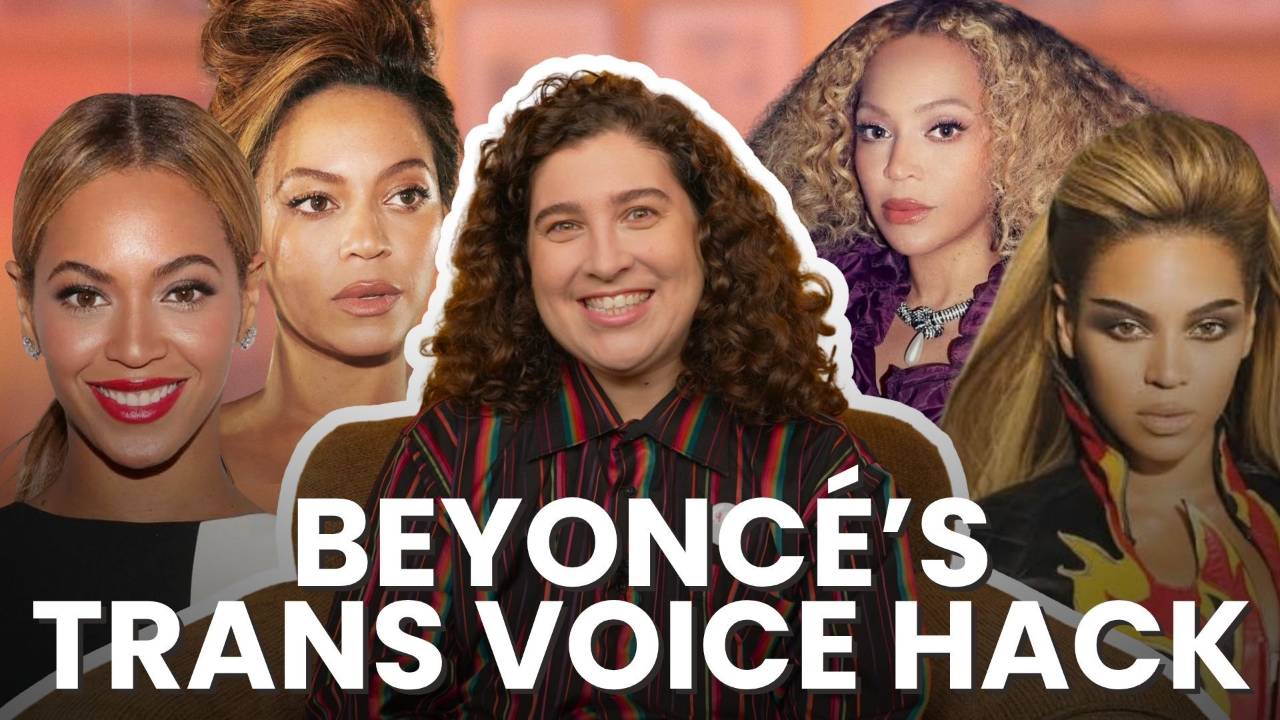
You want a speaking voice that better reflects your gender presentation, whether that's more feminine, more masculine, or simply more you. But when you sit down to actually do the practice, you feel silly. You feel like you're not yourself, like you're creating a character or "faking it," and like what you're doing must be wrong because it just doesn't feel "right."
As a gender-affirming voice teacher, I can tell you this experience is extremely common in trans voice training. Whether people are studying with a course, a speech-language pathologist, or by themselves, almost everyone goes through this feeling of tension and general "not-right-ness."
In this post and the video below, I'm sharing a concept that can make your practice easier, more approachable, and more fun. To explain it, I need to make a 20-year-old pop culture reference to Beyoncé and her alter ego, Sasha Fierce.
Watch the Full Video
Prefer to read? Keep scrolling for the full post, including the best moments from my conversation with Dr. Leah B. Helou.
The Trans Voice Training Lecture I Can't Stop Thinking About
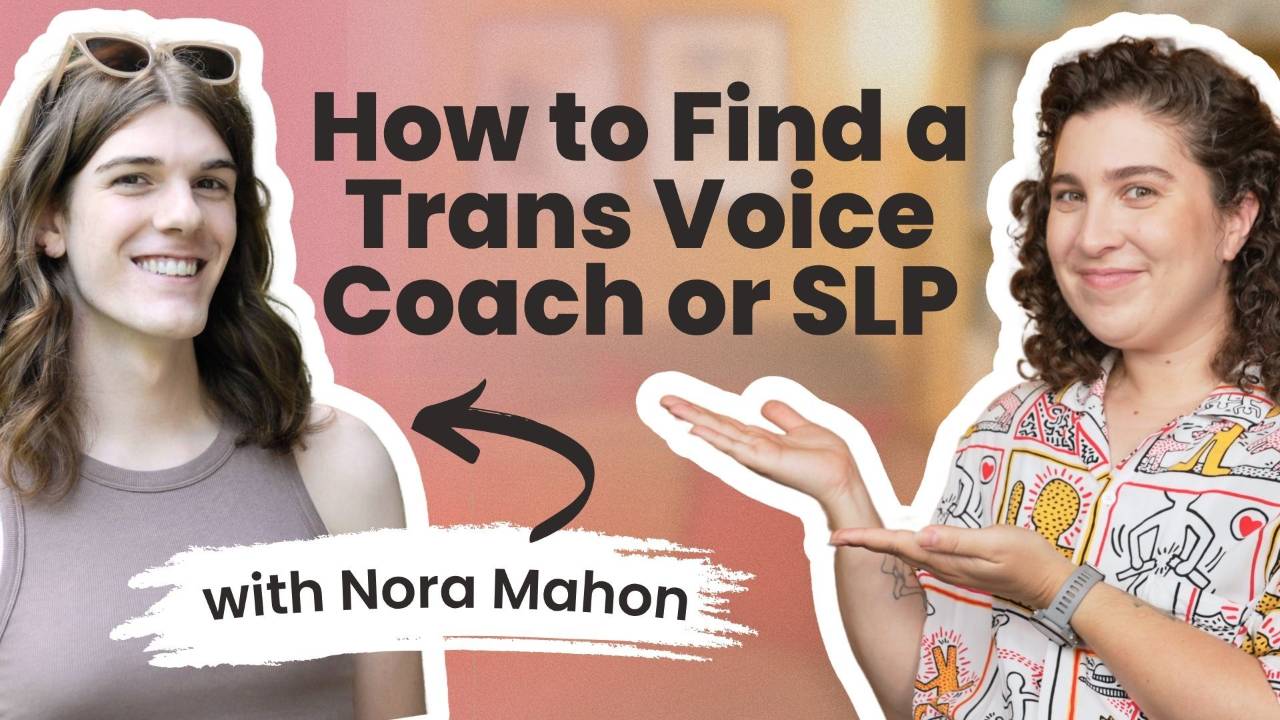
I was so delighted to find some concrete strategies for this hurdle in a recent course I took through the Vocal Congruence Project called Advanced Practice for Vocal Affirmation. It was hosted by speech-language pathologists Dr. Leah B. Helou and Nora Mahon (a long-time friend of the channel, whose advice on choosing a trans voice provider is well worth your time).
That course was two full days long and I have thoughts and feelings about all of it, but there was one lecture I haven't stopped thinking about since. It was Leah's lecture on a concept called narrative identity.
So I did what any reasonable person would do. I emailed her and asked if she would come explain it to you herself, and she said yes.
Dr. Leah B. Helou (she/her) is on faculty at the University of Pittsburgh, where she studies the pathways between the mind and the voice. She has been seeing patients and working with private clients since 2004. I find her work completely fascinating, and I'm certain you will too.
How to Choose the Right Trans Voice Provider (Advice from Nora Mahon)
What Is Narrative Identity?
Narrative identity is the story you tell about yourself. Things like "I'm the quiet one," "I'm the person people take seriously at work," "I'm not a singer," or "I'm bad under pressure."
Leah describes it like this:
"It's just the kind of internal life story. Each of us has one. It's evolving, it's meant to evolve, and it's a mechanism for interpretation. How do I interpret my past, my present, my future? And it can be used as a very powerful mechanism for self-development, self-maintenance, and wellness." - Dr. Leah B. Helou
The idea comes from personality psychology. Researchers Dan McAdams and Kate McLean describe narrative identity as a person's internalized, evolving life story, one that weaves together the remembered past and the imagined future to give life some sense of unity and purpose (McAdams and McLean, 2013).
When I first heard Leah talk about this, I was transported back to my master's in songwriting. A teacher was talking to us about our final essay, and she said, "Just remember how powerful the stories are that you tell yourselves, and if you think this is gonna be a really challenging essay to write, it will."
I have personally felt the power of narrative identity in my life. And in my students' lives, those stories are also wrapped up in how they sound, which is why this work can shake things up and create discomfort.
When You Change Your Voice, You Change Your Story
"People really sometimes fail to appreciate until they're in it, until they're really in the thick of things, that when you change the way you talk, you change who you are." - Dr. Leah B. Helou
Leah pointed out that this can feel destabilizing, even when the changes themselves are affirming.
I see this from every direction. Transmasculine students who worry that a more masculine voice will cost them their softness and their emotional range. Transfeminine students who love their more feminine voice and miss being taken seriously in a meeting.
Or on the flip side, there are transmasculine students who do want to be perceived as more assured and stoic, but feel their voice in training doesn't project that. Or transfeminine students who want to project a sultry diva, but feel they are only giving mousey librarian.
On either side of that equation, those feelings are not a sign that anyone is doing this wrong. Voices don't exist in a vacuum, and neither do we. We're working inside a whole world of assumptions about who gets to sound like what.
You Don't Have to Arrive at One Voice
Leah added something I think a lot of people need to hear:
"Even more challenging when people have this belief, which I think many people do, that they need to arrive at one voice." - Dr. Leah B. Helou
Her point is that you have "a dynamic set of tools," so why not have "many voices and use them in different environments"? You can keep more than one voice in your toolkit and switch between them on purpose, whether that's at work, with family, or anywhere else.
Enter Sasha Fierce: Beyoncé's Alter Ego
Which brings me, at long last, to my 20-year-old pop culture reference.
In 2008, Beyoncé released an album called I Am... Sasha Fierce and told everyone that Sasha was an alter ego who came out when she performed. When she went on Oprah, she described the moment Sasha shows up:
"Usually when I hear the chords, when I put on my stilettos. Like the moment right before when you're nervous, then Sasha Fierce appears, and my posture and the way I speak and everything is different." - Beyoncé on The Oprah Winfrey Show, 2008
Let that sink in for a second. The literal Beyoncé needed to be somebody else to walk on stage and do her thing. She wasn't Queen B 24/7, 365 days a year. So I asked Leah what she made of that.
"It's also fake it till you make it. It's like, I, Beyoncé, don't have these things, so I need to call upon this archetypal self." - Dr. Leah B. Helou
But Isn't Playing a Character in Voice Training Fake?
Now, I know what some of you are thinking, because it's the single most common thing my students tell me: if I'm putting on a character, then I'm putting on a voice, and that means I'm faking it. And if you want me to say it, I'll say it: yes.
Welcome to Being Human
"Welcome to being human," Leah told me. "Faking is just one way to frame it, right? We could reframe it." Instead of repeating that you're faking it, she suggests telling yourself something closer to the truth:
"You could also just say, 'I'm doing it. I'm doing my best. I'm finding my way, and this is what it feels like, and this is the discomfort.'" - Dr. Leah B. Helou
And my favourite line from our whole conversation: "You get to choose your story, and if you don't like that story, stop saying it."
Your Current Voice Was Learned, Too
I want to add one thing to that. The voice you have right now was not handed to you at birth. You picked it up from your family, your friends, your town, the TV you watched, and more. I dig into the research behind this in The Science Behind Your Voice: Biology vs. Behaviour.
The thesis of that post is that choosing your voice as an adult is an act of autonomy, the same way choosing your clothes is. Nobody puts on a new pair of pants and worries about being accused of "faking" anything.
Think back to when you learned to ride a bike, or skate, or whatever. Were you awkward and dorky doing it? Yes. Does that mean you still do it "dorky" now, after years of practice? No.
Isn't This a Bit Woo?
If alter egos and inner stories are starting to sound a bit woo for you, I promise it isn't. My background is in physics. I am not a spiritual person. But with my friends I'm one way, with my niece I'm another way, at the doctor's office I'm a third way, and on camera I'm a fourth. That doesn't make one of these "real" and the rest "fake." It makes them all facets of me, and that's true of every single one of us. Beyoncé just gave one of her facets a name.
If the "fake" feeling is what keeps tripping you up, these posts go deeper into where it comes from and why it fades:

Why Does My New Voice Feel Fake? (And Why That’s Normal)
Is Trans Voice Work “Inauthentic”? (Spoiler: No)

You Are ALREADY an Expert at Modifying Your Voice
Who Shows Up for Your Trans Voice Practice?
The tool itself is simple. Before you practice, notice who came into the room with you, and then decide whether that's the one you want running the session.
Leah thinks of the self as a kind of healthy multiplicity:
"We're a chorus of individual selves all shoved into one body, and those individual selves don't always play nice together." - Dr. Leah B. Helou
Sometimes, the self that shows up for voice work is not the most helpful one. When that happens, Leah names it without fuss:
"Okay, great. You brought the critic into the room. That's cool. You know, but like, how's that working for you?" - Dr. Leah B. Helou
Then she asks who else might be in there. Here are some of the people you could invite into the practice room instead:
- Your inner athlete. In Leah's words, "They power through discomfort. They stick it out. They dedicate themselves to the process and the practice."
- Your creative. "They explore, they play, they rearrange matter. They allow there to be multiple iterations."
- Yourself in twenty years. "Why don't you call that person into the room?"
- Sasha Fierce, or anyone else whose energy you'd like to borrow.
- Somebody you invent on the spot.
If you're thinking, "But I'm not an athlete," Leah has an answer for that too:
"Your reality in your head is whatever you choose to make it, and we're allowed to just say a thing is true. Sure, I have an inner athlete. What would it look like if that's the person who shows up for the work this week?" - Dr. Leah B. Helou
Did you catch that? You do not have to already be an athlete to call one in. You're allowed to make one up.
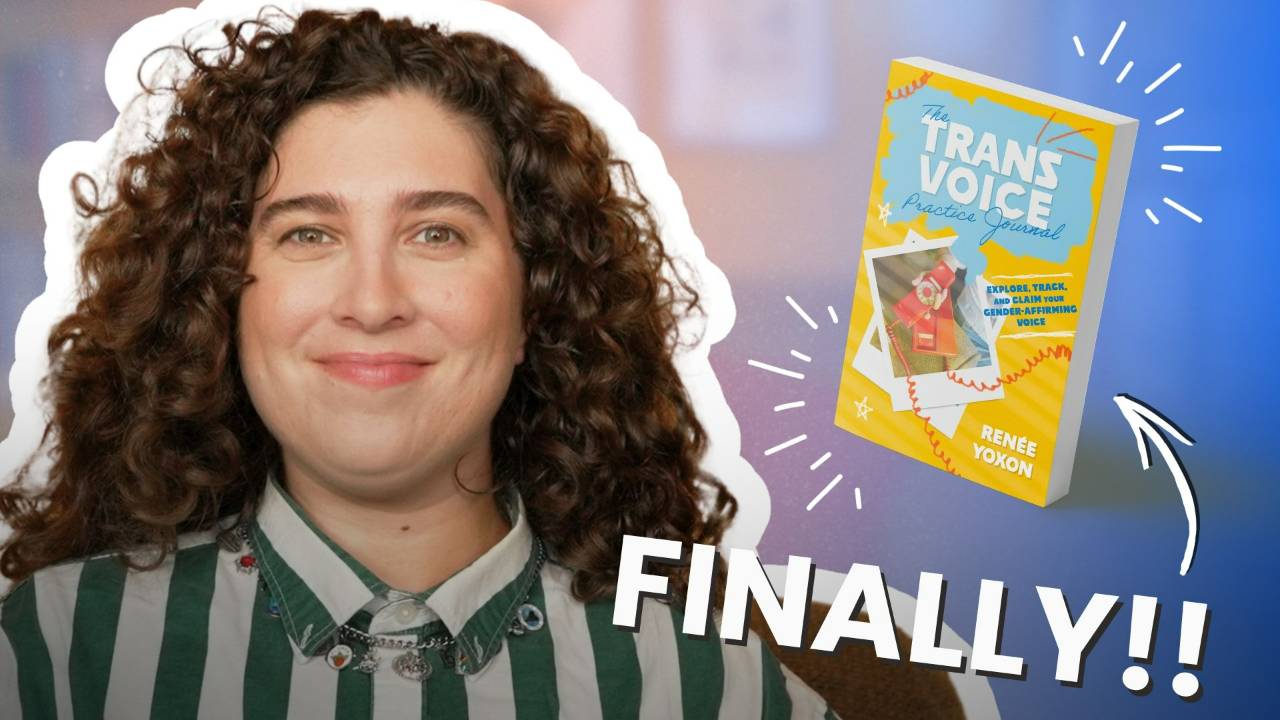
I love this approach so much that there's an exercise in my upcoming book, The Trans Voice Practice Journal, for naming your critic and having an actual conversation with them: thanking them for all the work they do to keep you safe, and then politely asking them to take a lap while you're working.
And if your critic gets loud the second you start, judgment-free warm-ups are a gentle way to separate how you feel about yourself from the practice itself.
Step Into the Part Before You Practice
What If I'm Just Not That Type of Person?
If you're hearing all this and thinking, "This might work for some people, but not me. I'm just not that type of person," I want you to hear this:
"You're always one radical decision away from changing your life. You could decide that you wanted to centre this person, and what would it look like for you to lead with that self, or lead with Sasha Fierce in your life, just for a week? Do the experiment, right? What changes? And you don't even have to vocally lead with it. What happens if for a day you step into this persona just with your clothes and accessories and the way you stand?" - Dr. Leah B. Helou
Then, the next day, she suggests layering on a voice.
And if Sasha Fierce feels too many rungs up the ladder from where you are today, Leah suggests starting with a statement that's already true, like "I don't know quite who I am right now, but I know I'm gonna figure it out."
Find Your Version of the Ballgown
Leah's homework for this is to put on a ballgown and walk around your house for half an hour before you practice:
"What would happen if before you did your voice work tonight, you literally, like, put on a ballgown, and you just walked around your house for 30 minutes before you even did this work? What could that facilitate?" - Dr. Leah B. Helou
She says people never believe she means this seriously. She means it seriously. Beyoncé said something similar on Oprah: "When you put on the wig and put on the clothes, you walk different."
You don't need a ballgown. You need whatever your version of the ballgown is:
- the jacket
- the boots
- the posture
- the playlist
- the scented candle
- the eyeliner
- the nails
Put that on first, and then practice. If you like this idea, it's a close cousin of how I romanticize my practices with clothes, lighting, and music.
What if it were easy? How would I approach this exercise if I believed I could do it?
Two Things to Know Before You Try It
First, Leah was clear that this is a practice tool and not therapy. She's a speech-language pathologist, and while she draws on theory and evidence from psychology, she keeps that line clear. We're not excavating anybody's past here, and I am certainly not certified in Internal Family Systems. We're simply deciding which parts of you get to lead your practice session.
Second, if you try it and it feels too weird, that's fine. You're allowed to put it down. You are not failing at voice training because one particular tool isn't for you. But if you never try it, you'll never know if it works.
Integration: When the Character Becomes You
Now, Beyoncé's Sasha story has an ending.
In 2010, she told Allure, "Sasha Fierce is done. I killed her. I don't need Sasha Fierce anymore, because I've grown and now I'm able to merge the two."
So I asked Leah whether that's the goal. Is the person you call in supposed to eventually just become you?
"It's the goal if that works for you." - Dr. Leah B. Helou
For Beyoncé, integration was the path. Leah was clear that there's no wrong ending to this story:
"It doesn't really matter the story you put together or the narrative identity you hold. What matters is that you're crafting that narrative identity in a way that's in service to your highest good and to your wellness." - Dr. Leah B. Helou
Then she said something I'm still chewing on: "It was all fake anyway." And a beat later: "It's all real anyway."
The version of me you see in my videos, with the loud shirts and the Mx. Frizzle energy, did not arrive fully formed when I was five years old. There are absolutely days when I'm in a baggy white tee with nothing left to give. I just wouldn't bring that version of me into the practice room. I'd bring this one.
It was all fake anyway, and it's all real anyway. Both of those are true, and you get to pick which one you practice with today.
If you're wondering whether your new voice will ever stop feeling like a character and start feeling like you, these posts are for you:
Will My New Voice Ever Become My Default?

When Will My Target Voice Come Naturally?

How to Practice Gender Euphoria (Instead of Waiting for It)
Conclusion: Who Are You Inviting Into Your Trans Voice Training This Week?
So, this week, stop asking whether the voice sounds right yet, and start asking who you want with you while you work on it. Your inner athlete, your creative, yourself in twenty years, Sasha Fierce, or somebody you invent on the spot. The process is the part you can actually control, and if you show up for it, things change. (It's the same reason I love identity-based goals for voice practice.)
I asked Leah what she wants for people doing this work, and I'm going to let her close it out, because I couldn't say it better:
"What I wish for everyone who embarks on this work is that they can pivot from all the painful aspects of it and all the heaviness and all the high stakes and awkwardness and discomfort and pubescence of it, and all the negatively valent stuff, and just kind of turn on your heel.
All of that is real and true, and there is also the flip of it, in the domain of joy and beauty and fun and creativity and exploration and claiming and growing." - Dr. Leah B. Helou
Thank you so much to Leah for this conversation. You can learn more about her work at the University of Pittsburgh and find free resources, including a directory of gender-affirming voice providers, at the Vocal Congruence Project. And if you haven't seen it yet, my interview with Nora Mahon is a great next stop.
If you want a place to do this on paper, my upcoming book, The Trans Voice Practice Journal, has the exercise for naming your critic, plus room to write the story of your voice. It comes out November 19, 2026, and you can pre-order it now. Use the code VOICE20 for 20% off (that link applies it for you).
And if you're not sure where to start practicing, I recommend starting with my free one-hour workshop, Change the Gender of Your Voice (No Hormones or Surgery Required).
I want to know: who are you inviting into the practice room this week? Tell me in the comments on the video.
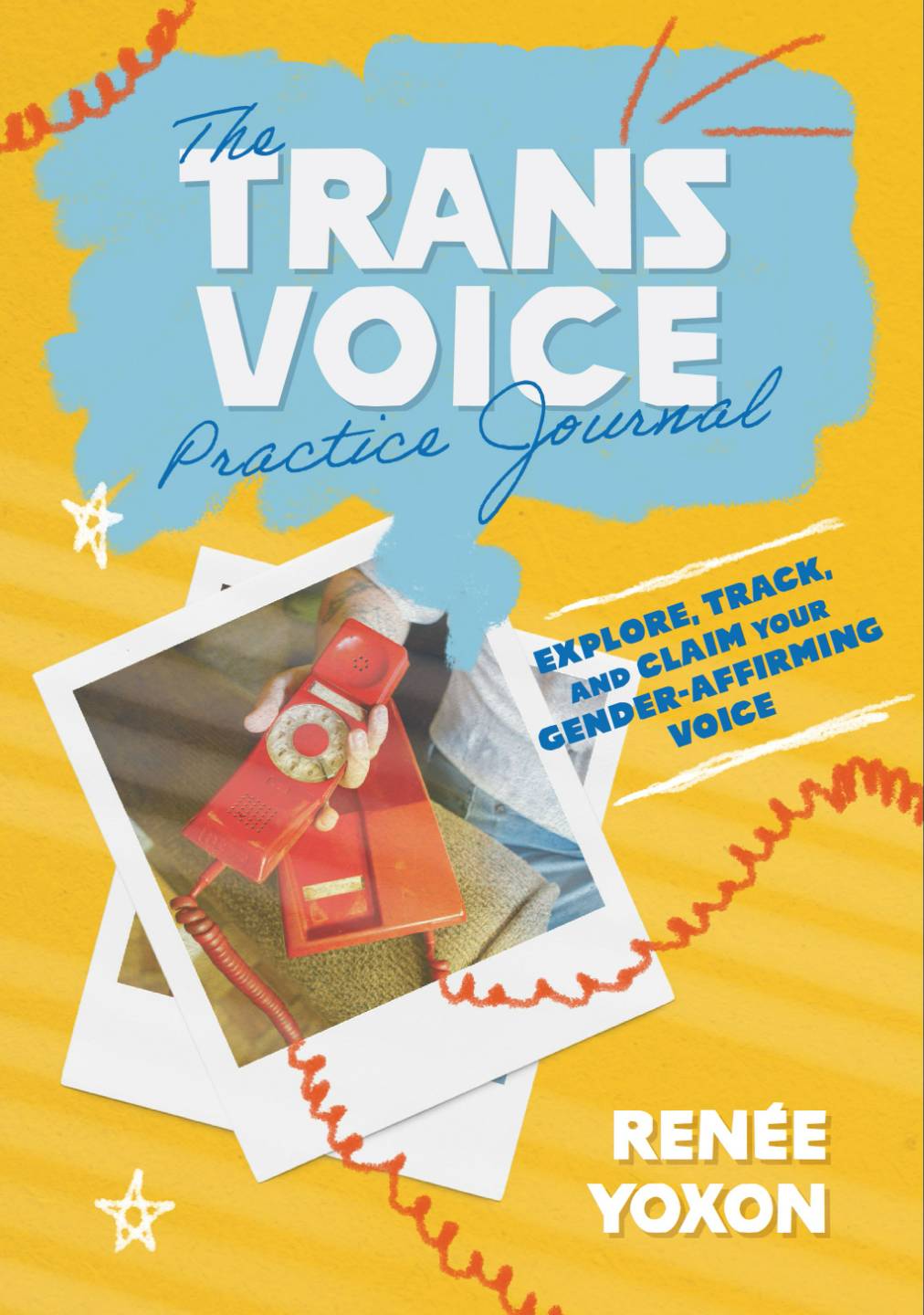
The Trans Voice Practice Journal
Pre-order now and save 20% with the code VOICE20.
Want weekly tips, resources, and insights on trans voice training? Sign up for my newsletter and get the latest content delivered straight to your inbox. It's free!